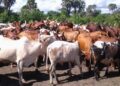











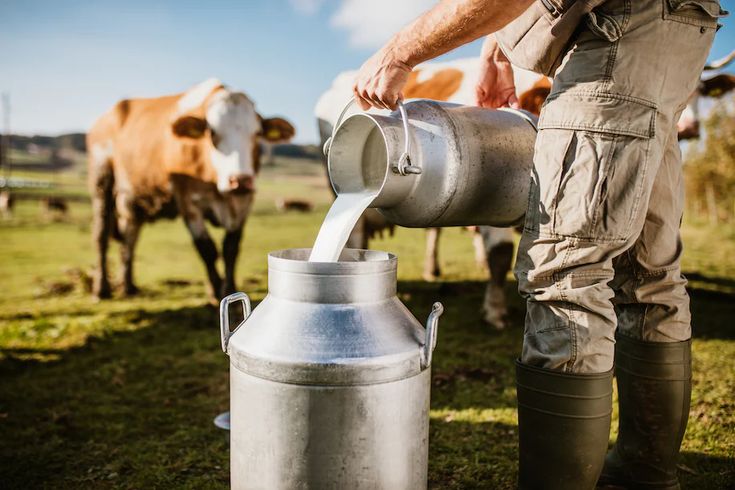
Tanzania has over 30 million cattle and produces approximately 4.1 billion litres of milk annually. Yet, the country continues to import processed dairy products worth billions of shillings each year.


This is not a production problem.
It is a systems problem.
Abundance Without Commercial Output
On paper, Tanzania’s dairy sector holds immense potential. Its livestock population ranks among the largest in Africa, and milk production volumes are significant. However, the majority of cattle are indigenous breeds with low productivity, typically yielding just 1–2 litres of milk per day.
By contrast, improved dairy breeds can produce more than ten times that amount. The result is a structural imbalance: high livestock numbers, but limited volumes of commercially viable milk.
The Quality Gap
Beyond volume, quality remains a critical constraint.
Milk produced at the smallholder level often falls short of required standards due to:
- Poor hygiene practices
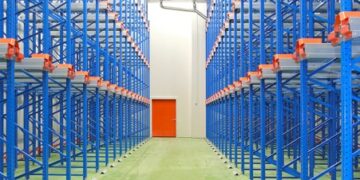
- Limited access to cooling and storage facilities
- Inconsistent handling across the supply chain
For processors, consistency is non-negotiable. In its absence, imported milk powder and processed dairy products become a more reliable alternative.
A Broken Cold Chain
Perhaps the most significant bottleneck lies in collection and logistics infrastructure.
A large share of Tanzania’s milk is produced in rural areas, far from processing facilities. Without adequate cold-chain systems, milk spoils before it can reach the formal market. As a result, only a fraction of total production is processed, while the rest is either consumed informally or lost.
This disconnect between production zones and industrial processors continues to suppress the sector’s full potential.
Underutilized Industrial Capacity
Tanzania’s dairy processing industry remains underleveraged. Existing facilities often operate below capacity—not due to lack of demand, but due to inconsistent supply of quality raw milk.
Meanwhile, urban demand for packaged milk, yoghurt, butter, and cheese continues to rise. Imports fill this gap, reinforcing a cycle where domestic production fails to translate into market-ready products.
From Value Chain to Value Gap
At its core, Tanzania’s dairy sector is not constrained by resources, but by coordination.
Weak linkages between farmers, aggregators, processors, and distributors have created a fragmented value chain—one that struggles to convert raw production into scalable commercial output.
This is where the real issue lies:
milk exists, but value does not.
A Strategic Investment Opportunity
For investors, this inefficiency presents a clear and compelling entry point.
Unlocking the sector does not require reinventing it—it requires connecting it.
High-impact opportunities include:
- Development of milk collection and cooling infrastructure
- Expansion and modernization of processing facilities
- Investment in improved dairy genetics and feed systems
- Cold-chain logistics and last-mile distribution networks
With the right interventions, Tanzania has the potential not only to achieve dairy self-sufficiency, but to become a regional export hub.
Tanzania’s continued reliance on imported dairy products is not a reflection of scarcity, but of missed integration.
Bridging the gap between production and processing will be critical in transforming the sector from a fragmented system into a competitive industry.
For those willing to invest in efficiency, the opportunity is clear:
turning abundance into value.