











As global trade dynamics continue to shift, China’s engagement with Africa is entering a more structured and strategic phase. The emphasis is no longer solely on resource extraction, but on building integrated trade systems that combine market access, production, and long-term economic cooperation.


Within this transition, Tanzania is emerging as a country of growing importance.
From Trade Partner to Production Base
China’s current approach signals a gradual move toward relocating segments of its manufacturing ecosystem to cost-competitive regions. Africa—and particularly East Africa—is increasingly being considered for this transition.
For Tanzania, this presents an opportunity to move beyond its traditional role as a supplier of raw commodities such as gold, cashew nuts, and agricultural products, and instead position itself within value-added production and processing.
The expansion of market access for African exports into China further strengthens this shift, creating a more viable pathway for Tanzanian producers to scale and diversify.
Infrastructure as a Competitive Advantage
Tanzania’s geographic and logistical positioning provides a strong foundation for industrial growth.
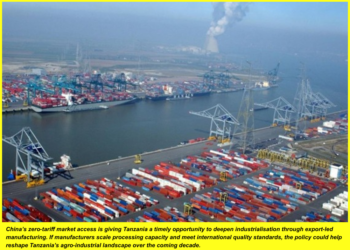
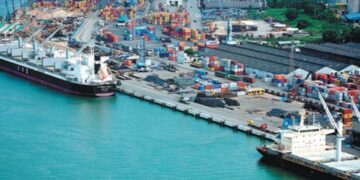
The Port of Dar es Salaam continues to serve as a key maritime gateway for both domestic and regional trade, supporting transit flows to neighboring landlocked countries. This is complemented by inland connectivity through networks such as the TAZARA Railway, which enhances access to regional markets.
Looking ahead, projects such as the Bagamoyo Port could further strengthen Tanzania’s position as a logistics and industrial hub, depending on execution and policy alignment.
These assets collectively position Tanzania as a potential entry point for manufacturing and distribution across East and Central Africa.
Employment and Skills Development
Increased industrial activity is expected to generate employment across manufacturing, logistics, and supporting sectors. However, the long-term impact will depend on the extent to which Tanzania can align investment with workforce development.
Targeted efforts in:
- Technical training
- Vocational education
- Industrial skills development
will be essential to ensure that job creation translates into sustainable economic advancement, rather than remaining concentrated in low-value segments
Investment Outlook: Conditions for Growth
While Chinese investment interest in Africa is expanding, capital allocation remains highly selective. Investors are increasingly prioritizing environments that offer:
- Regulatory clarity and consistency
- Efficient administrative processes
- Reliable infrastructure and energy supply
- Scalable industrial frameworks
Tanzania’s ability to strengthen these areas will play a decisive role in determining whether it can convert strategic positioning into sustained investment inflows.
Managing Risk While Capturing Opportunity
Integration into global supply chains offers clear benefits, but it also introduces structural risks. Without deliberate policy direction, Tanzania could face:
- Continued reliance on low-value production
- Limited domestic value retention
- Exposure to external market dependencies
A balanced approach—one that promotes both foreign investment and local industry development—will be critical.
China’s evolving trade strategy presents Tanzania with a timely opportunity to accelerate its industrial and economic transformation.
By leveraging its infrastructure, improving the business environment, and prioritizing value addition, Tanzania can strengthen its role not just as a trade participant, but as a competitive production and investment destination.