











DAR ES SALAAM, Tanzania’s coffee industry is registering steady growth in production and export earnings, driven by improved farm productivity, stronger global prices, and expanding investment in processing capacity. Ranked among Africa’s established producers, behind Ethiopia and Uganda in export volumes, Tanzania remains globally recognized for its high-quality Arabica. As supply constraints in major producing countries tighten international markets, recent sector reforms and renewed productivity efforts are repositioning coffee as one of the country’s leading high-value traditional export crops, with growing momentum in specialty and premium segments.


Production Shows Recovery, Expansion Targets 2030
Data from the Tanzania Coffee Board (TCB) indicate that the country currently produces between 60,000 and 70,000 metric tons annually (approximately 1–1.2 million 60kg bags).
Production composition remains:
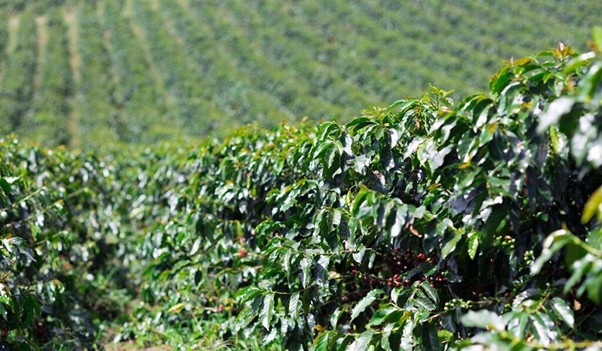
- Arabica (70%) – grown in Kilimanjaro, Arusha, Mbeya, Songwe, Njombe and Ruvuma
- Robusta (30%) – largely from Kagera Region
Government reforms under the Coffee Industry Development Strategy aim to increase output to 300,000 metric tons by 2030, representing a significant scale-up from current levels.
Over the past three seasons, output has moderately recovered following earlier weather-related setbacks. Distribution of improved seedlings and rehabilitation of aging trees, particularly in the Southern Highlands, are contributing to yield improvements.
With more than 320,000 smallholder farmers, coffee remains one of Tanzania’s most socially and economically impactful export crops.
Export Earnings Strengthen on Global Price Rally
Coffee remains among Tanzania’s leading traditional exports. According to the Bank of Tanzania (BoT), annual export earnings have fluctuated between USD 150 million and USD 200 million, with upward momentum recorded in 2024/2025 amid stronger global prices.
Key export destinations include:
- European Union (55–60%) – notably Germany, Italy, and Belgium
- Japan (15%)
- United States (10-12%)
- Emerging Middle Eastern and Asian markets
Tanzania benefits from preferential trade access to the EU, enhancing competitiveness.
Meanwhile, the International Coffee Organization (ICO) reported multi-year global price highs in 2025 due to supply challenges in Brazil and Vietnam, improving export margins for East African producers.
Value Addition Gains Momentum
Historically, more than 90 percent of Tanzania’s coffee has been exported as green beans. However, 2025-2026 is seeing increased emphasis on:
- Local roasting and branding
- Specialty certification
- Direct trade arrangements
- Traceability and sustainability compliance
New private investments in Mbeya, Kilimanjaro, and Kagera are expanding washing stations and dry mills to improve grading standards and premium positioning.
The government continues to encourage domestic processing to retain greater export value and generate employment across roasting, packaging, and distribution.
Investment Opportunities Expand
According to the Tanzania Investment Centre (TIC), the coffee value chain presents opportunities in:
1. Estate Expansion
Growth corridors in the Southern Highlands and Northern Zone.
2. Processing & Roasting Facilities
Modern washing stations, dry mills, specialty roasting plants, and instant coffee manufacturing.
3. Agricultural Inputs & Mechanization
Improved seedlings, irrigation systems, fertilizer blending, and harvesting equipment.
4. Specialty Branding & Export Platforms
High-altitude Arabica from Mount Kilimanjaro and Mbeya continues to command niche premiums.
Long-Term Outlook
If productivity reforms and replanting programs are fully implemented, sector projections suggest Tanzania could double output by 2030 and push export revenues beyond USD 300 million annually, depending on global price cycles.
With rising international demand for traceable and sustainably sourced coffee, Tanzania’s high-altitude Arabica offers competitive positioning within global specialty markets.
As 2026 progresses, coffee is increasingly viewed not only as a traditional export crop but as a scalable agribusiness platform capable of driving rural incomes, foreign exchange growth, and expanded value addition.