












DAR ES SALAAM, Tanzania – A convergence of robust economic growth, strategic infrastructure investments, and booming tourism is positioning Tanzania as one of Africa’s most promising economic frontiers, with recent developments across multiple sectors signaling sustained momentum toward the nation’s Vision 2050 development goals.


The positive trajectory is underscored by the International Monetary Fund’s latest projections, which forecast Tanzania’s GDP growth at 6.0% in 2025 and 6.3% in 2026, supported by prudent fiscal management and declining debt levels.
Economic Foundations Strengthen
The country’s macroeconomic stability remains a cornerstone of its development strategy. Inflation is projected to remain moderate at 3.3% in 2025 and 3.5% in 2026, while government debt is expected to decline from 49.6% of GDP in 2025 to 48.3% in 2026.
“This stability didn’t happen by accident,” noted an economic analyst familiar with Tanzanian markets. “It’s the result of consistent fiscal discipline, successful tax reforms, and strategic investments in key sectors.”
The Tanzania Revenue Authority has reported significant success in domestic revenue mobilization, with coordinated tax administration reforms leading to approximately a 20% rise in assessed taxable income.
Energy and Mining Sectors Advance
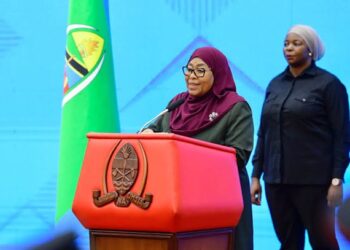
Recent months have seen substantial developments in Tanzania’s natural resource sectors. In March 2025, President Samia Suluhu Hassan laid the foundation stone for a $50 million LPG storage facility in Tanga, enhancing access to clean cooking energy and supporting the National Clean Cooking Energy Strategy.
The energy sector received another boost with October’s announcement of significant natural gas discoveries in Mtwara Region, where preliminary studies indicate a 32% probability of substantial gas reserves in the Lindi-Mtwara Block. Simultaneously, the Mnazi Bay gas production expansion project has reached 68% completion.
In the mining sector, the Bank of Tanzania has made significant strides in its gold acquisition program, purchasing 15.37 tonnes of gold within the first year of the initiative. The central bank is now holding this high-purity gold in its monetary gold account at the Bank of England, strengthening the country’s foreign exchange reserves.
Industrial and Education Transformation
The government has announced ambitious plans to establish industrial parks in every district across the country, aiming to boost local production, create youth employment, and add value to Tanzania’s agricultural and mineral products.
Complementing this industrial push, the education sector is undergoing modernization. The Deputy Minister for Education, Science and Technology recently directed the Vocational Education Training Authority (VETA) to prioritize training in artificial intelligence, robotics, and information technology systems.
“An industrial economy relies on a skilled, knowledgeable and innovative workforce,” the Deputy Minister emphasized during a visit to VETA College in Chemba District.
Tourism and Investment Momentum
Tanzania’s tourism sector continues to show strong performance, with a recent delegation of leading UK tourism agents touring the country’s iconic national parks and conservation areas to better promote Tanzania in the European market.
The government’s investment promotion efforts appear to be yielding results. President Samia Suluhu Hassan has consistently emphasized that “Tanzania is open for investment, Tanzania is safe for investment, and Tanzania’s investment policies are friendly and sustainable.”
This sentiment was echoed in the Tanzania Revenue Authority’s recent high-level meeting with Barrick Gold officials, where both parties reaffirmed their commitment to cooperation and voluntary tax compliance.
Challenges and Forward Look
Despite the positive developments, Tanzania faces ongoing challenges. The potential suspension of €156 million in European Union development funds, while having minimal direct budget impact according to government analysis, highlights the complex international relationships the country must navigate.
Similarly, Zanzibar’s clove exports have plunged by 76% due to global oversupply and climate shocks, underscoring the vulnerability of agricultural commodities to external factors.
Nevertheless, as Tanzania continues to implement its development agenda across multiple sectors, the combination of strategic vision, investor-friendly policies, and critical infrastructure investments positions the country for sustainable growth and an increasingly prominent role in the East African economy.