












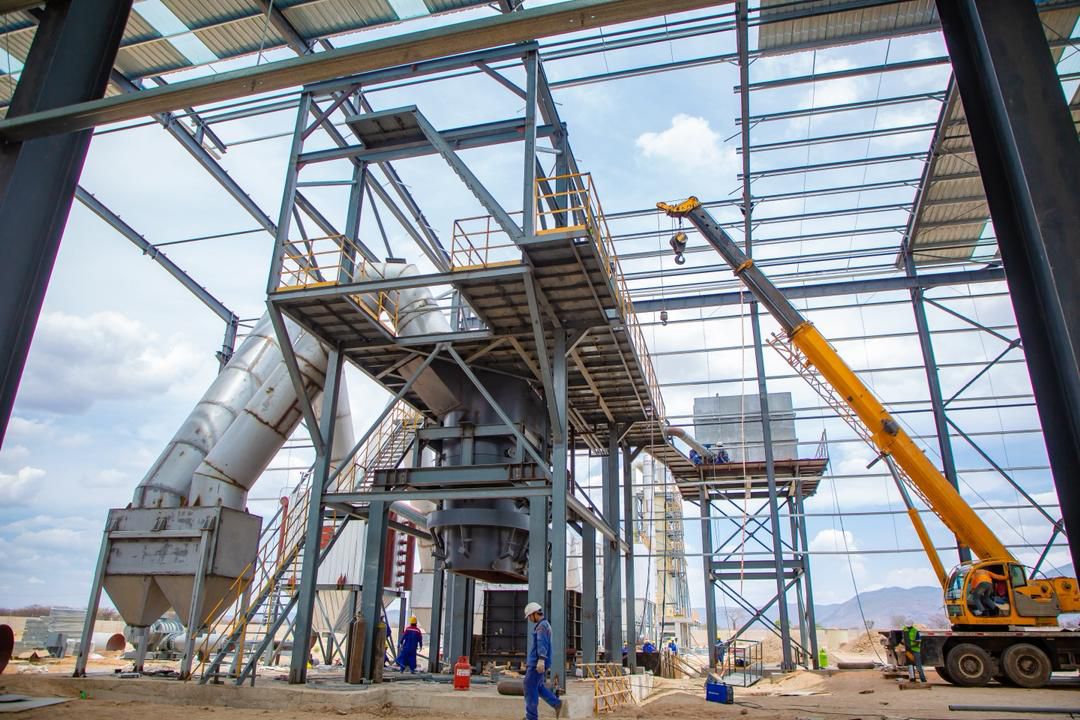
A new nickel and copper processing plant in Tanzania’s Dodoma Region is 85% complete and on track to begin production in February 2026, a concrete step in the country’s strategy to capture more value from its mineral resources by processing them domestically before export.


The TZS 37 billion (approximately USD 16 million) facility, located in the Mayamaya area of Bahi District, represents a shift in Tanzania’s mining sector, moving beyond the extraction and export of raw ores to include smelting and refining. The plant is a direct implementation of a national policy driven by President Samia Suluhu Hassan, who has directed that all mineral value-addition activities be conducted within the country.
Core Project Details
- Project Location: Mayamaya area, Bahi District, Dodoma Region
- Completion Status: 85% complete as of the inspection on November 21, 2025
- Operational Timeline: First production line scheduled for February 2026
- Planned Capacity: Designed to process 300 tonnes of ore per day
- Total Investment: TZS 37 billion
- Project Developer: Zhong Zhou
Economic and Strategic Importance
The plant is a cornerstone of the government’s mineral beneficiation strategy, which aims to ensure the full mineral value chain—from extraction to processing—is completed within Tanzania. This transition from exporting raw ores to higher-value processed products is expected to increase national earnings, create jobs, and build a more resilient economy.
“This plant embodies the government’s determination to broaden the mineral value-chain, entrench local industrialisation, uplift small-scale artisanal miners, generate employment, and increase the share of mineral-sector revenues retained in the national economy,” said Anthony Mavunde, Tanzania’s Minister for Minerals, during his site inspection.
The project is expected to create over 300 permanent and temporary jobs and provide a guaranteed, structured market for small-scale miners, protecting them from price exploitation and informal trading networks.
A Broader National Push
The Dodoma plant is part of a wider national effort to promote domestic processing across a range of strategic minerals, including gold, graphite, and rare-earth elements. This policy has already made Dodoma a hub for mineral processing, with the region now hosting nine value-addition plants.
“This progress strengthens a growing landscape of nine value-addition factories already established in the region under the current administration,” said Joachimu Nyingo, District Commissioner for Bahi.
The focus on nickel and copper also positions Tanzania to benefit from the global clean energy transition, as these minerals are vital components in electric vehicle batteries, solar power systems, and other green technologies.
Tanzania’s push for mineral beneficiation reflects a broader trend in resource-rich African nations seeking to retain more value from their natural resources and drive industrial development.