










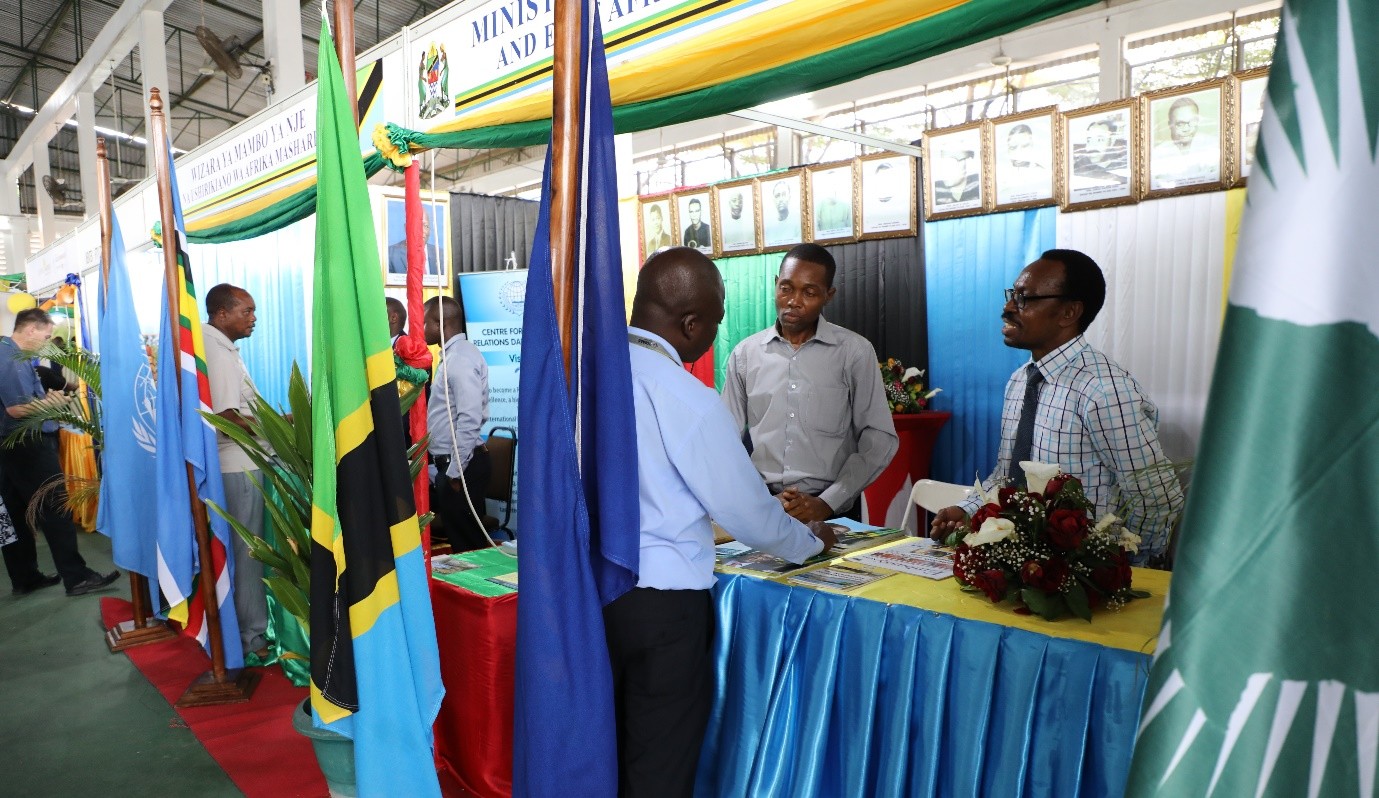
DAR ES SALAAM. Tanzania is stepping up preparations for the 50th edition of the Dar es Salaam International Trade Fair (DITF), as its expanding exhibition calendar highlights the country’s rising profile as a regional trade and investment gateway.


Held annually at the Mwalimu Julius Nyerere Trade Fair Grounds, the flagship event widely known as Saba Saba will run from late June to mid‑July 2026, coinciding with Saba Saba Day on July 7.
Rising Participation Signals Market Depth
The 2025 fair drew over 4,100 exhibitors and nearly 400,000 visitors from more than 25 countries, cementing its status as one of East Africa’s largest trade platforms. Government data show recent editions consistently attract 3,500-4,000 exhibitors and upwards of 350,000 visitors, spanning public institutions, private firms, and international delegations.
Participation has surged from just 100 companies in the late 1980s to more than 1,500 exhibitors by the mid‑2000s, reflecting long‑term growth in Tanzania’s trade ecosystem. Organised by the Tanzania Trade Development Authority (TanTrade), the DITF has evolved into a strategic platform linking Tanzania with markets across East, Central, and Southern Africa.
Economic Impact and Job Creation
Trade fairs are increasingly contributing to employment and enterprise development. Recent editions generated over 11,000 temporary jobs, particularly for youth and SMEs integrated into supply chains during the event period.
For local businesses, the fairs serve as gateways to new markets, offering opportunities to secure partnerships and showcase products to both domestic and international buyers. This dual impact investor access to scale and local empowerment through visibility, underscores the fair’s economic significance.
Regional Positioning and Competition
Within East Africa, Tanzania’s exhibition industry is gaining ground but still trails Kenya’s more diversified expo ecosystem. Yet Tanzania’s strategic port access, lower participation costs, and expanding infrastructure are strengthening its competitiveness. The DITF’s reach into land‑linked markets such as Zambia, Rwanda, and the Democratic Republic of Congo further enhances its regional positioning.
For investors, this combination of affordability and connectivity makes Tanzania’s trade fairs an attractive entry point into East Africa’s fast‑growing economies.
Expansion beyond Saba Saba
The flagship fair is now complemented by a growing calendar of sector‑focused exhibitions in construction, healthcare, automotive, and tourism. These events are attracting international exhibitors and reinforcing Tanzania’s role as a multi‑sector trade gateway.
Digitisation is also reshaping the exhibition ecosystem, with online booking systems, e‑permits, and virtual platforms improving access for both local and foreign participants, according to TanTrade.
Prospects
As Tanzania prepares for the golden jubilee edition of its flagship trade fair, the exhibition sector is establishing itself as a critical enabler of trade, investment, and industrial growth.
With participation levels rising, regional integration deepening, and sector‑specific expos expanding, trade fairs are playing an increasingly central role in connecting Tanzanian businesses to global markets.
For investors, the trajectory is clear: Tanzania’s exhibition economy is no longer just a promotional platform, it is becoming a strategic gateway into East Africa’s growth story.