













DAR ES SALAAM. Tanzania’s manufacturers are positioning for a potential export expansion into China as Beijing’s zero‑tariff trade policy for eligible African products creates fresh momentum for the country’s agro‑processing and industrial growth ambitions.
The policy is opening a significant commercial window for Tanzanian exporters seeking greater access to one of the world’s largest consumer markets, particularly for value‑added agricultural products such as processed cashew nuts, sesame, spices, coffee, and horticultural goods.
Industry players say the opportunity could accelerate investment in processing capacity, export logistics, and industrial manufacturing as Tanzania moves to capture higher value within its agricultural supply chains.
Leaders Highlight New Export Opportunities
Speaking at a meeting themed “Zero‑Tariff for Shared Opportunities” in Dar es Salaam, Minister of Industry and Trade, Hon. Judith Kapinga said the initiative comes at a crucial time as Tanzania strengthens its position in regional and international trade.
“This opportunity is vital for local entrepreneurs, and we are deeply grateful to China for opening these doors to trade,” Kapinga said. “We will strengthen coordination among institutions, simplify trade procedures, and deploy technology‑driven systems to support exporters targeting the Chinese market.”
Kapinga urged the private sector to improve product quality and invest in value addition, innovation, and branding to increase competitiveness in China and global markets.
Chinese Ambassador, Hon. Chen Mingjian added that the zero‑tariff policy would significantly enhance the competitiveness of Tanzanian exports in the Chinese market.
“By eliminating tariffs on products such as sesame and cashew nuts, this policy will support Tanzania’s industrialisation by encouraging agricultural processing, cold‑chain logistics, and manufacturing growth,” Chen said.
She noted that bilateral trade between China and Tanzania reached USD 11.28 billion in 2025, a 27 percent increase year‑on‑year, with trade in the first quarter of 2026 rising by 28.1 percent to USD 2.9 billion.
Industrialisation through Value Addition
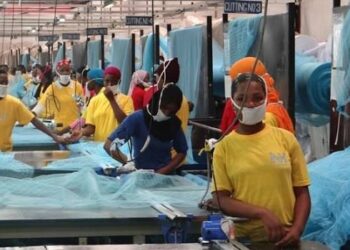
Officials emphasise that Tanzania’s long‑term export competitiveness depends on moving beyond raw commodity exports. The zero‑tariff framework offers a practical route toward that goal by rewarding manufacturers able to produce export‑ready finished or semi‑processed goods.
Cashew processing, sesame oil extraction, packaged spice production, and specialty food manufacturing are increasingly attracting investor attention, with analysts saying first‑mover investors could benefit significantly as export systems mature under the China trade window.
Growth Prospects
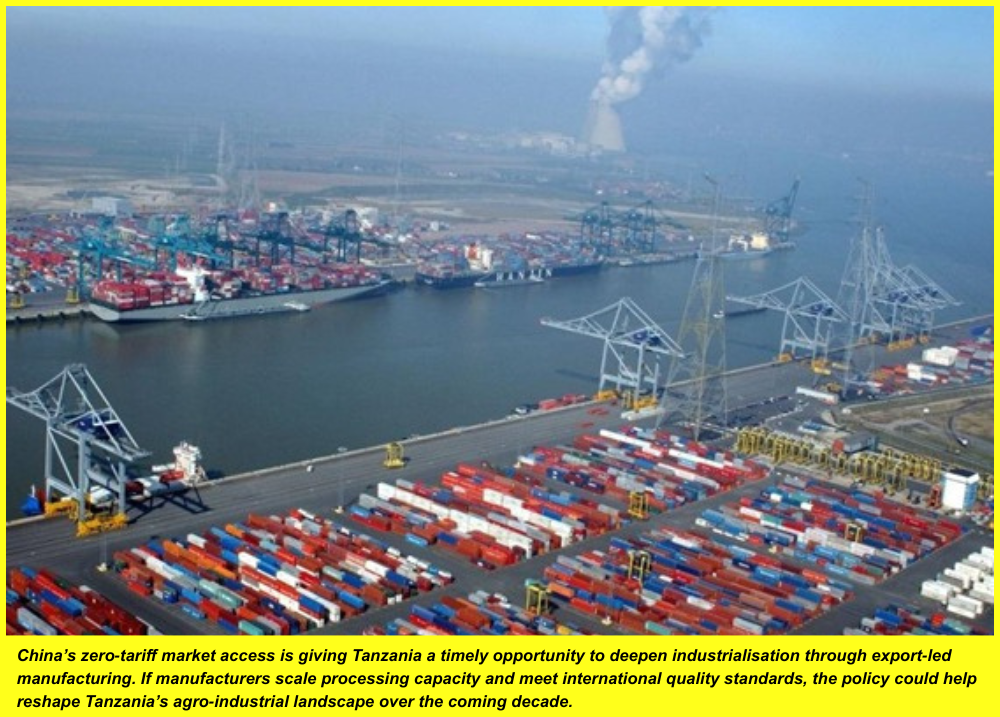
China’s zero‑tariff market access is giving Tanzania a timely opportunity to deepen industrialisation through export‑led manufacturing. If manufacturers scale processing capacity and meet international quality standards, the policy could help reshape Tanzania’s agro‑industrial landscape over the coming decade.
For investors, the message is clear: Tanzania’s access to China’s tariff‑free market is no longer simply a trade advantage, it is becoming a strategic industrial growth platform capable of unlocking the country’s next wave of export‑driven investment.