













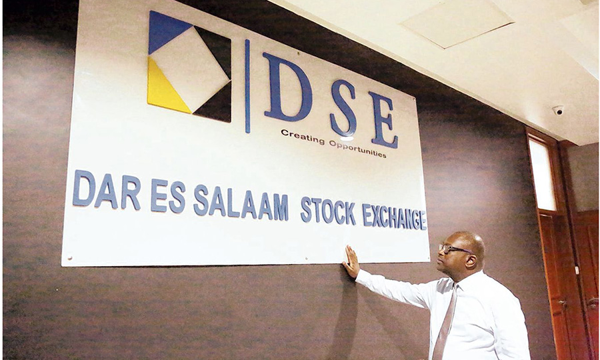
The majority of Tanzania’s economic coverage centers on gas fields, ports, and mining. The Dar es Salaam Stock Exchange (DSE), where investors can make direct purchases in the nation, receives less attention. The trading data for this week reveals a tense market. A new class of local retail investors, many of whom are entering via their mobile phones, is attempting to fill the void left by foreign investors who have been net sellers.


This Week’s Numbers
Equity turnover increased 147.30 percent to TZS 41.66 billion during the week of October 26–30, according to the DSE and Tanzania Invest weekly report. With a 30.23 percent increase, NMG led the gainers. The main index went in the opposite direction: the Banks, Finance, and Investment index sank 4.49 percent, while the DSE All Share Index declined 2.53 percent. The total market capitalization decreased 2.53 percent from TZS 39,569.88 billion the previous week to TZS 38,567.91 billion at the end of the week.
In other words, while trade was active, prices were low. The most noteworthy information is who was selling: over the week, foreign investors made around $9.7 million in net sales. When talking about Tanzania’s economy, the primary subjects of discussion include mines, ports, and gas reserves. Less focus is paid to the Dar es Salaam Stock Exchange (DSE), which allows investors to make direct investments in the country. The market is tense, according to this week’s trading statistics. The space created by foreign investors who have been net sellers is being filled by a new generation of local retail investors, many of whom are joining through mobile phones.
A Month of Net Foreign Selling
It was not an isolated incident. According to weekly reports from the same source, foreign investors were net sellers in every recent week for which data were released: roughly $1.19 million during the week of October 5–9, roughly $1.34 million during the week of October 19–23, and the $9.7 million mentioned above. Total market capitalization declined from TZS 40,376 billion on October 2 to TZS 38,568 billion on October 30, a drop of nearly 4.5 percent.
In late October, a Daily News market perspective stated that domestic purchasing was attempting to absorb the cross-border divestiture, which was described as persistent. Investors are anticipated to trade cautiously and selectively in the upcoming weeks, according to the same view, which also observed that offshore liquidity patterns continue to have a significant impact on market direction.
The Retail Investor Story
At home is the counterweight. Linking mobile money wallets directly to central securities depository accounts has increased retail investor activity on the DSE, according to a September market assessment by Kadoo Securities. Simply said, the paperwork and bank procedures that previously prevented small savers from entering the market are no longer necessary for someone with a mobile money account. According to the same analysis, the All-Share Index increased by 4.82 percent in September, with TZS 233.3 billion in transactions.
A feeling of scale is provided by smaller weekly trading data. A normal week for a market that is still modest by regional standards, the turnover for the week of October 19–23 was TZS 16.85 billion across 18,105 deals and roughly 9.26 million shares. This also illustrates how the figures might be affected by a single significant international trade.
The Fixed-Income Side
A large portion of the institutional demand is going into debt. Recent oversubscribed primary bond issuance was highlighted in the Daily News forecast, with institutional investors using the secondary market to reach their duration goals. Additionally, it highlighted a potential bond offering by the Higher Education Students’ Loans Board (HESLB), which would expand the corporate debt market and add a new fixed-income option. For comparison, Tanzania Invest stated that in the week ending October 2, the yield on a 15-year government bond was 10.79 percent, and the shilling was worth roughly TZS 2,641 to the dollar.
What Investors Should Weigh
- Liquidity: Weekly turnover in the low tens of billions of shillings means large positions can be hard to enter or exit.
- Foreign flows: Sustained net selling can pressure prices, and it is worth asking whether it reflects Tanzania-specific concerns or wider emerging-market conditions. The reports reviewed here do not say.
- Concentration: A few heavyweight counters, especially in banking, can swing the whole index, as this week’s banking index drop shows.
- Local demand: Mobile-wallet access is expanding the retail base, which could cushion future outflows. How large that effect becomes remains to be seen.
- Currency: Returns for dollar-based investors depend on the shilling as well as share prices.
The Bigger Picture
The port, the LNG plant, and climate finance have been the main focus of Tanzania’s appeal to international capital this year. The stock exchange offers a more direct and quiet path to the same development narrative, and this week it is presenting a mixed picture. The exchange is determining which of those forces prevails when domestic savings arrive through their phones and foreign money departs at the margin. The weekly foreign net flow and retail participation trend are the numbers that investors should pay attention to since they will collectively demonstrate whether local demand is strong enough to keep the market stable.