










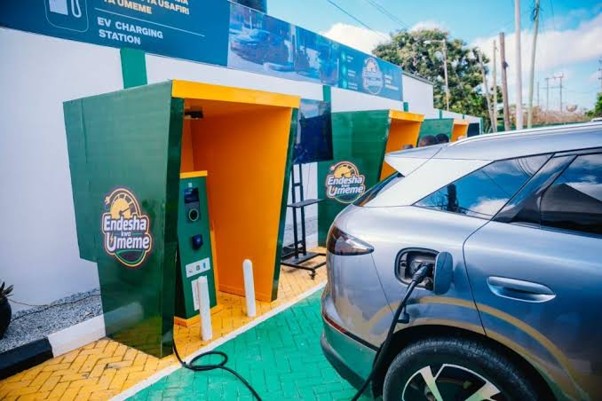
Dar es Salaam. Tanzania is moving to build a broader electric‑mobility ecosystem, bringing government and private‑sector players together as the country seeks investment in electric vehicles, charging networks, battery systems and related services.


The latest push came on 31 August 2026, when the Tanzania Electrical, Mechanical and Electronics Services Agency (TEMESA) convened the country’s first E‑Mobility Multi‑Sectorial stakeholder meeting in Dodoma. The meeting gathered government representatives and private companies involved in the manufacture, importation and distribution of electric vehicles and three‑wheelers to discuss opportunities and challenges.
Government Opens Dialogue With Industry
Speaking on behalf of the Permanent Secretary in the Ministry of Works, Engineer Julius Humbe said collaboration between government and the private sector would be critical in creating an enabling environment for electric mobility.
He linked the push to rising fuel costs and ambitions under Development Vision 2050, noting that electric vehicles could reduce operating costs for government fleets. Demonstrations at the meeting showed EVs capable of travelling more than 600 kilometres on relatively low energy consumption.
Discussions also covered charging infrastructure, maintenance services, vehicle safety standards, spare‑parts availability and the development of skilled personnel to support the technology.
Regulation Creates Infrastructure Opportunity
A major development for investors is the regulatory framework already in place. In April 2026, the Energy and Water Utilities Regulatory Authority (EWURA) issued E‑Mobility Guidelines for Charging Stations and Battery Swapping, covering electric two‑wheelers, three‑wheelers, four‑wheelers, vans, buses and trucks.
EWURA emphasised that the guidelines are intended not only to ensure safe and reliable charging but also to create a market for the e‑mobility charging business. This opens investment opportunities in charging networks, battery swapping, installation, maintenance and technical services.
TISEZA Identifies Investment Opportunities
The Tanzania Investment and Special Economic Zones Authority (TISEZA) has explicitly positioned electric mobility within its automotive investment portfolio. Opportunities include assembly and manufacturing of EVs and motorcycles, battery solutions, swapping systems and charging infrastructure, alongside automotive components and services.
This gives investors multiple entry points from electric motorcycle assembly and battery systems to charging networks, diagnostics, and maintenance and after‑sales services.
Regional Market Potential
TISEZA highlights that Tanzania’s automotive sector offers opportunities to serve both the domestic and wider East African market. Local assembly and component production could provide a platform for regional expansion, subject to trade and regulatory frameworks.
From Imports to an EV Industry
Tanzania’s approach signals a shift from simply importing electric vehicles to building the ecosystem around them: vehicles, batteries, charging points, swapping stations, technicians, spare parts, software, financing and maintenance services.
For investors, this ecosystem may represent the larger opportunity.
Investor Outlook
Tanzania’s electric‑mobility market is still at an early stage, but several building blocks are now aligned: government-industry engagement, EWURA’s regulatory framework, and TISEZA’s investment promotion.
The immediate opportunity is not just to sell electric cars. It is to build the infrastructure and services that make electric mobility viable at scale.
Companies able to bring capital, technology, manufacturing capacity and technical expertise into electric motorcycles, EV assembly, batteries, charging networks and related services could find Tanzania positioning itself as a base for the next phase of East Africa’s electric‑mobility market.