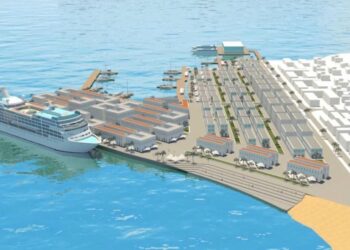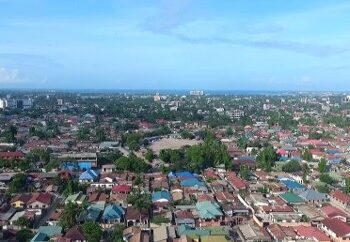








Today, the skyline in Dar es Salaam’s Masaki or Oyster Bay tells its own tale: cranes towering over partially completed apartment buildings, gated communities taking the place of single-story plots, and cafes emerging where informal dwellings once stood. Tanzania’s construction and real estate industries are not only expanding this year, but they are also clearly changing the appearance of the nation’s cities, and this week’s data helps to explain why.


A Sector Quietly Becoming an Economic Pillar
One of the most significant sectoral changes in Tanzania’s recent history, construction and real estate together now account for about 8 to 10 percent of the country’s GDP, a significant increase from just 5 to 6 percent ten years ago. In 2024, real estate alone was worth TZS 5.4 trillion. In the first nine months of 2025, it contributed 2.5 percent of GDP, growing at a rate of 4.3 percent, which was almost the same as the previous year. The World Bank and IMF are among the forecasters who predict that the property sector will continue to grow at a rate of 5 to 8 percent per year through 2030, while the construction and real estate sector as a whole will grow at a rate of 6 to 7 percent per year due to infrastructure investment, urbanization, and consistent inflows of foreign direct investment.
It is difficult to overestimate the demographic force driving that expansion. By 2044, Tanzania’s population, which currently stands at 70 million and is expected to expand by 3.2 percent a year, will reach 123.4 million. Over the next 20 years, millions more people are anticipated to relocate to cities like Dar es Salaam, Arusha, and Dodoma, every one of whom needs a place to live. The country is still 65.1 percent rural, but the urban portion has increased from 23.1 percent to roughly 35 percent.
Who’s Actually Buying, and Were
The breakdown of Tanzania’s housing market reflects both deep cultural preference and economic factors. Standalone houses, or self-built compound homes on private plots, still account for about 45% of the country’s residential market, far more than walk-up apartments (about 25%), managed condos (about 15%), and townhomes (about 8%). This preference has historical roots: even as tower development picks up speed in central Dar es Salaam, home ownership on private land retains profound cultural weight that apartment living has not superseded, and property was reasonably accessible in growing suburbs like Mbezi Beach and Tegeta.
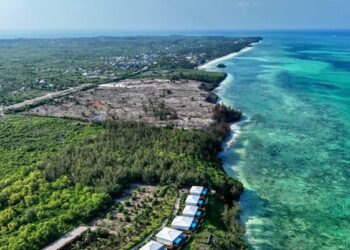
Kigamboni, across the bridge from central Dar es Salaam; Mbezi Beach and Tegeta along the northern coastal corridor; pockets of Mikocheni and Kawe near expanding commercial zones; and Fumba in Zanzibar, where master-planned development is reshaping what was once a quiet stretch of coastline, are the areas where the most obvious signs of neighborhood transformation are currently concentrated. All of them have the same obvious indicators, such as gated communities with contemporary security, restaurants and cafes targeted at middle-class and foreign inhabitants, improved roads and drainage, and multi-story apartment buildings taking the place of older unofficial buildings. Masaki and Oyster Bay now fetch up to TZS 11 million per square meter at the luxury end, with Stone Town and Zanzibar’s Nungwi beachside corridor following closely after on demand related to tourism as much as on pure residential purchases.
The Stadiums Behind the Story
Tanzania has been chosen to host the 2027 Africa Cup of Nations, which is one of the more peculiar reasons for the current construction activity. A new Samia Suluhu Hassan Stadium in Arusha and a new stadium in Dodoma have been built and renovated as a result of that one decision, and funding for both facilities has been specifically designated as a national budget priority for 2025–2026. It serves as a reminder that in a nation that is rapidly becoming more urbanized, a major sporting event is more than simply a few weeks of games; it is a driving force behind infrastructure spending that extends beyond the tournament itself, from stadium building to the roads, hotels, and transit connections created to support it.
In actuality, the transit connections and roads are already under construction. Phases III through V of the Dar es Salaam Bus Rapid Transit program, the 531.8-kilometer Dar–Chalinze–Morogoro–Dodoma Expressway, a 112.3-kilometer outer ring road around Dodoma, and the Pangani Bridge are among the major projects listed in the Ministry of Works’ current budget that run alongside the stadiums. These projects all contribute to the same urbanization narrative that drives residential demand.
The Friction Points Worth Watching
This growth is not frictionless. Even when prices rise, many regular Tanzanians are still unable to obtain formal home finance due to Tanzania’s persistently high mortgage interest rates, which average between 15 and 20 percent. Construction prices are increasing because to rising regulatory expenditures, and site acquisition is often complicated by ownership and title issues, especially in rapidly expanding peri-urban areas. In cities that are expanding more quickly than their infrastructure can always keep up, the legacy of informal housing continues to put pressure on planning systems and service delivery.
Three particular risks are identified by industry analysts as being worth keeping an eye on through 2027: growing borrowing costs that will reduce buyer affordability; currency depreciation that will increase the cost of imported building materials, which is a serious vulnerability considering how dependent Tanzania’s construction industry is on imports; and administrative bottlenecks in title registration that will slow down transactions. Due to the shilling’s sensitivity to local economic conditions, currency and import-cost shocks are thought to be the most likely of the three to occur.
In response to the kind of speculative development pressure that fast-appreciating coastal markets like Nungwi tend to attract, Zanzibar has taken steps to tighten oversight rather than just ride the growth wave. This includes mandatory registration and approval requirements through ZIPA for all real estate projects before implementation, marketing, or buyer solicitation, as well as official endorsement requirements for sales agreements.
Building Smarter, Not Just Bigger
Beneath all of this, there is a more subdued trend that is worth mentioning: developers are increasingly incorporating solar power solutions, smart home technology, and green building techniques into new projects. This is not so much a marketing gimmick as it is a sensible reaction to Tanzania’s still inconsistent grid reliability and growing energy costs. It aligns with the larger energy narrative that is unfolding abroad this year, as solar capacity is increasing nationwide and transmission infrastructure is being developed.
The Bigger Picture
Tanzania’s real estate and construction boom is a multi-layered phenomenon. Over the next 20 years, tens of millions of people will move into cities due to a population surge. A football tournament pushing stadium and transit expenditure years ahead of plan. A regulatory framework, especially in Zanzibar, is attempting to keep up with investor zeal before it surpasses supervision. Beneath all of this is a chronic affordability gap between what typical Tanzanian households can actually afford and where property prices are headed. This month, Masaki’s skyline is truly rising. The industry will spend the remainder of the decade determining if the housing stock being constructed corresponds with what the majority of Tanzanians can truly afford to live in.