










Tanzania is witnessing the simultaneous development of two very different water tales that are at odds with one another. One is an initiative by the government to create additional dams, a nationwide water grid, and smart meters in order to address persistent shortages during the next ten years. The other is a meteorological forecast, and it is arriving on a much shorter clock: worldwide meteorologists are currently alerting people to the possibility of one of the biggest El Niño occurrences ever, with flood risk already increasing along Tanzania’s northern coast and in the Lake Victoria basin. The two timelines began to clearly clash this week.


The Budget for a Thirsty Country
For the 2026–2027 fiscal year, Tanzania’s Ministry of Water has released a budget of approximately TZS 1.12 trillion (roughly $431 million). Members of Parliament have framed water security as a key component of the nation’s larger social and economic development, not a side issue to be resolved after more pressing issues like energy and transportation are resolved.
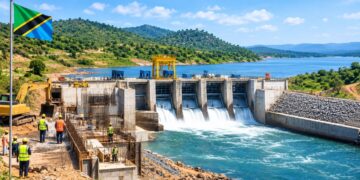
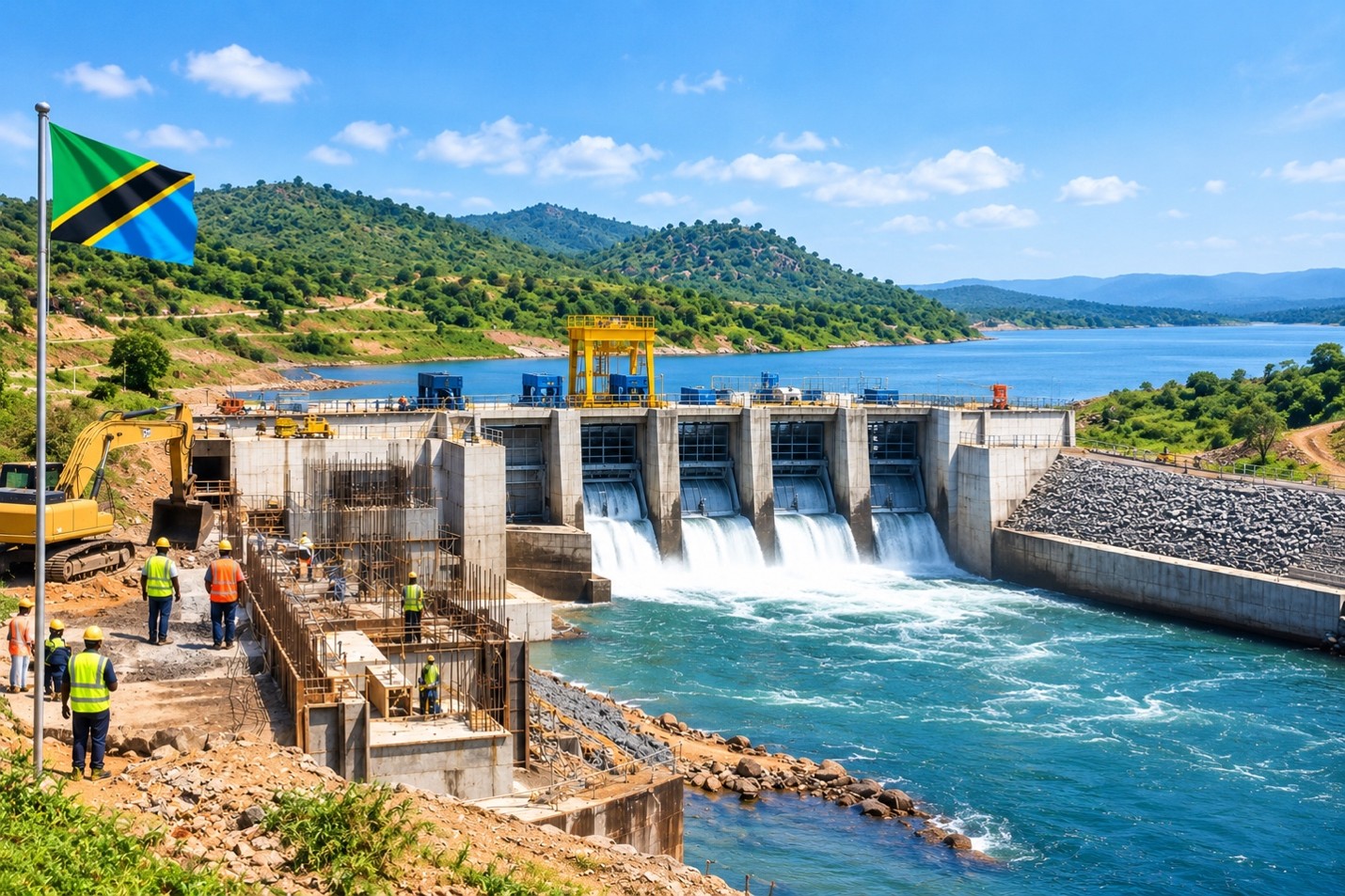
Significant headline commitments include the completion of the long-awaited National Water Master Plan, the ongoing implementation of the National Water Grid Project, which aims to direct water from lakes and rivers toward historically underserved areas, and a push for climate adaptation that entails the construction of 34 new dams, the rehabilitation of 33 existing ones, and environmental assessments for two additional locations. As part of a larger goal to source 70% of water sector investment from private capital rather than only public finances, Tanzania is creating a specialized Water Sector Bond to help pay all of this without relying just on the state budget.
Alongside the construction of the dam is a more subdued infrastructure story: a nationwide movement toward smart water metering, which aims to reduce the amount of water lost due to leaks, unauthorized connections, and unpaid bills that afflict utilities throughout the area. With an ultimate goal of more than 1.1 million urban meters by 2030, as of April 2026, 23,156 smart meter units had been placed in both rural and urban areas, up from 13,526 the previous year. The implementation has been accompanied by a consumer-facing pledge from officials: no more water disconnections on weekends or public holidays, and customers will be informed before any service is discontinued.
Looking Underground for Backup
Tanzania is increasingly exploring beneath its own feet in addition to its surface infrastructure. Groundwater, which is stored in subterranean aquifers, is becoming a crucial component of the nation’s water security strategy as population growth, agriculture, industrialization, and climate change all increase the demand for water. This is especially true for communities that heavily rely on seasonal rivers and lakes that can go dry for months at a time. Compared to a new dam, it is a less obvious solution, but it provides something dams can’t: resilience during the exact drought periods when surface water is least reliable.
The Forecast Complicating Everything
All of this grid planning and dam construction is predicated on the idea of controllable, predictable rainfall patterns. The weather data for this month indicates that assumptions are seriously strained. On September 3, the World Meteorological Organization verified that El Niño has now fully established. It is predicted to peak at the end of 2026 and grow to a very strong intensity, with a nearly 100% chance of continuing through February 2027. In addition, the US Climate Prediction Center warned of a 75% possibility of a historic event on its three-month index between October and December and reported sea surface temperature anomalies above 3.0°C in the eastern equatorial Pacific. Without holding back, UN Secretary-General António Guterres declared that the world was in “the danger zone of extreme weather.”
The Tanzania Meteorological Authority has linked the risk of repeated floods in Tanzania to three distinct moisture pathways: the southern highlands, the Lake Victoria Basin, and the northern coast. Climate researchers are cautious to add a key caution, though: regional weather systems and the Indian Ocean Dipole were responsible for some of Tanzania’s worst floods in history, which actually occurred in non-El Niño years. This indicates that El Niño increases an already-existing risk rather than being the only element that counts.
A City Already Feeling It
In Dar es Salaam, where water scarcity and rising temperatures are putting residents’ resilience to the test in very tangible, financial terms, the pressure is already evident in day-to-day living and is neither hypothetical nor limited to future flood predictions. In just a few weeks, the cost of a 1,000-liter water delivery has increased from about 20,000 to 30,000 Tanzanian shillings, or roughly $8 to $12, making water even more unaffordable for low-income homes who are already struggling. In order to maintain water in the house, some residents have had to shift funds intended for their kids’ school payments.
The Bigger Climate Picture
There is yet opportunity to raise public understanding of the scope of the issue. According to data from the Afrobarometer survey, Tanzania’s awareness of climate change is still relatively low, despite the fact that the country is already facing significant, obvious consequences, such as the loss of more than 80% of its glacier ice over the past century on Mount Kilimanjaro, one of Tanzania’s most iconic national symbols. Researchers point out that although Tanzania emits few greenhouse gasses worldwide, it is still very vulnerable to the effects of climate change due to drought and increasingly unpredictable rainfall, which threatens traditional farming methods in a nation where agriculture continues to be the main source of rural livelihoods and, as this month’s other headlines have demonstrated, a significant portion of the country’s economic growth.
The Bigger Picture
A matter of month forecast that cautions that the near-term weather may not cooperate with the assumptions of a ten-year infrastructure plan created for a nation attempting to secure its water future makes this week unique because it directly collides two timeframes that are usually kept apart in public discourse. Thirty-four new dams and a national water system are exactly the kind of resilience Tanzania will need to fend off a more powerful and erratic El Niño pattern. But just one of the two races building that resilience and surviving this specific flood season is almost finished.