









At the center of Tanzania’s energy news this month is an unsettling but telling coincidence: TANESCO has been conducting planned power outages at home to finish a domestic transmission upgrade in the same weeks that the nation is signing deals worth tens of billions of dollars to become a regional energy hub. It accurately captures the current state of Tanzania’s energy industry, which is ambitious on the international scene while still performing basic plumbing work.


Tanga’s Big Bet
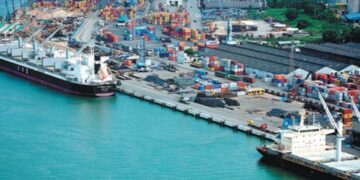
It is difficult to exaggerate the headline bargain. In order to transform the port of Tanga into a regional energy hub, Tanzania and Uganda signed a memorandum of understanding on August 6 with the Bahrain-based commodities trader Vitol. According to Tanzania’s Energy Minister, this deal might potentially draw investment reaching $20 billion. The agreement, which was signed by Vitol Bahrain, Uganda’s national oil company, and the Tanzania Petroleum Development Corporation, covers infrastructure for petroleum storage, refining, distribution, and logistics. It is intended to complement the East African Crude Oil Pipeline, which is currently under construction and will connect Tanzania’s coast to Uganda’s oilfields.
It is important to be clear about what this is and is not at this early stage: neither government has stated exactly what infrastructure will be developed or at what final cost, and the agreement is not legally enforceable. However, the goal is clear: Tanzania is positioning its coastline not only as an export destination for its own resources but also as the logistical hub for the energy commerce of its landlocked neighbors, a position that Kenya’s port of Mombasa has historically fought for in the area.
The Investment Forum Behind the Handshakes
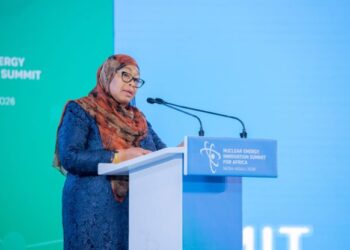
The Tanga announcement was not made in a vacuum. It arrived at the same time as the Africa50 General Shareholders’ Meeting and the Africa Infrastructure Forum, both of which took place in Dar es Salaam in early August. President Samia Suluhu Hassan urged African leaders to expedite the transformation of infrastructure ideas into bankable, financially feasible projects. A public-private power transmission line, increased industrial usage of natural gas, and, most significantly, an expansion of kidney dialysis treatment capacity linked to the larger infrastructure finance drive were the three distinct agreements that the forum created including Tanzanian institutions.
Using the same platform, Energy Minister Deogratius Ndejembi presented a broader regional argument: in order to truly realize the potential of the African Continental Free Trade Area, African nations must improve their cross-border energy infrastructure. According to his perspective, improved regional grid and pipeline connection is a prerequisite for the industrialization and commerce expansion that AfCFTA is meant to bring about, not a byproduct of energy development.
Solar Quietly Scales Up
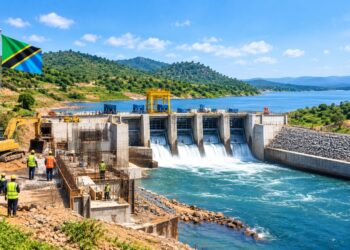
Tanzania’s renewable energy project has been moving forward in smaller, more deliberate steps away from the multibillion-dollar headline projects. In order to construct the second, 100 MW phase of the Kishapu Solar Power Project in Ngunga, Shinyanga Region, the nation has signed a contract worth around TZS 204.4 billion with Sagemcom Energy & Telecom and STEG International Services. This would increase the project’s overall cost to approximately TZS 323 billion, or 150 MW. When the first 50 MW phase, which cost TZS 118.6 billion, went online in March 2026, it became Tanzania’s first utility-scale solar plant connected to the grid. It serves as a helpful reminder that, despite the grandiose hub announcements, Tanzania’s genuine generation mix is gradually diversifying.
Paying the Price for Sovereignty
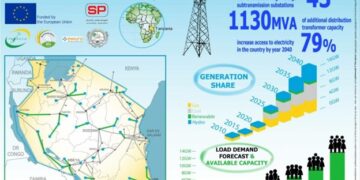
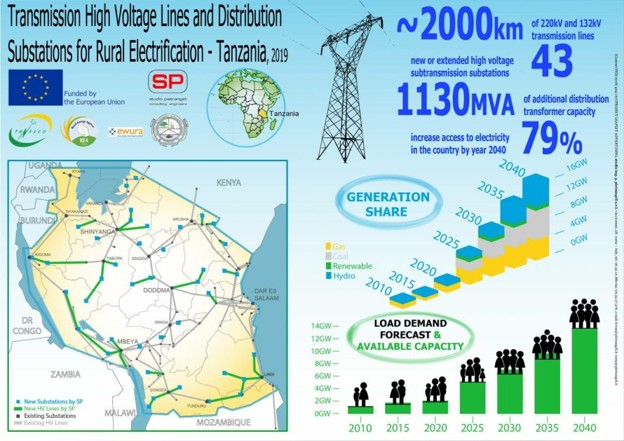
The Chalinze–Dodoma transmission line, a 345-kilometer, 400-kV high-voltage project worth about TZS 514 billion, is arguably the most quietly important domestic news this month. It is funded exclusively by the Tanzanian government, without the customary support of the World Bank or African Development Bank, which distinguishes it from many of Tanzania’s other significant infrastructure projects. The principal contractor for the final grid integration is TBEA.
There is an obvious short-term cost associated with that sovereign funding strategy. In order to finish the integration work, TANESCO planned two rounds of power outages, one from July 30 to August 4 and another from August 11 to August 17, alerting industrial consumers ahead of time through a vigorous public education campaign. With preparation, the disruption is controllable for large industrial users. Even if it is just temporary, unplanned downtime without backup power is more expensive for small businesses and the unorganized sector in impacted areas. The trade-off is put simply by energy economists following the project: eliminating foreign-currency debt exposure today in exchange for some short-term suffering is a calculated wager on longer-term energy sovereignty.
Courting Industrial Capital
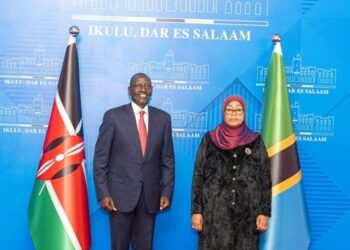
The month concluded with a Tanzanian government delegation visiting the Dangote Petroleum Refinery and Petrochemicals complex in Lagos in early August. The delegation, which included the Minister of State for Planning and Investment and the Minister for Industry and Trade, formally reaffirmed Tanzania’s interest in luring more Dangote Group investment into domestic industrial infrastructure, energy, and fertilizer production. Tanzania is actively looking for the industrial partners to satisfy its capacity, which is a tiny but constant data point.
The Bigger Picture
Read together, August’s energy stories describe a country trying to do two things at once, at very different scales. On one level, Tanzania is negotiating its way into becoming a genuine regional energy and logistics hub — courting Ugandan crude, Bahraini trading capital, and Nigerian industrial investment in the same month. On another, far more granular level, it’s still doing the unglamorous work of getting its own domestic grid built, funded on its own terms, even when that means asking its own citizens to sit through the inconvenience of scheduled blackouts. Whether the Tanga hub becomes the twenty-billion-dollar reality the ministers describe will depend on financing details still to be worked out — but the domestic grid work happening in parallel suggests Tanzania is, at minimum, trying to make sure its own house is wired correctly before it starts powering everyone else’s.