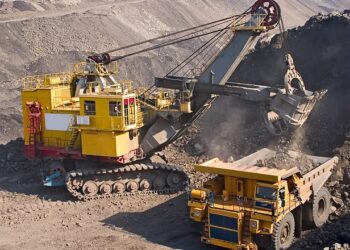









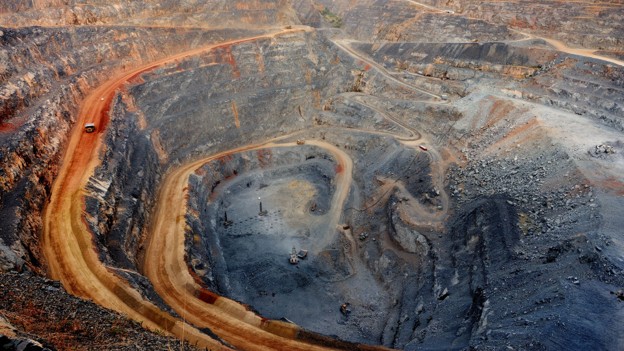
If agriculture depends on rainfall and tourism on wildebeest, Tanzania’s mining industry depends on something far less romantic but perhaps more important: the capacity to transport rock from the ground, through a processing facility, onto a train, and out of a port before another person’s rock beats it to market. According to industry headlines this week, Tanzania is finally constructing the second half of that equation, which involves transporting as well as drilling.


Steel, Nickel, and a Very Big Briefing
With a planned investment of TZS 600 billion, A1 Iron & Steel Tanzania Ltd. is getting ready to start construction on a new steel manufacturing facility in Nala, Dodoma. For a facility intended to use domestic iron ore as its main input, construction is slated to start this month and be completed in 15 months. This aggressive timeline directly supports the government’s push to add value to raw minerals domestically rather than exporting them unprocessed and re-importing finished steel.
On June 8, the executive chairman of Life zone Metals and Tanzania’s Treasury Registrar gave President Samia Suluhu Hassan a direct briefing on the status of the long-awaited Kabanga Nickel Project, which is located further west. This indicates that, after years of halted progress, one of East Africa’s largest untapped nickel deposits is getting closer to full implementation.
As part of a larger trend, Perseus Mining is moving forward with construction on its goldfield project in Tanzania. In 2025 alone, the nation received $10.95 billion in total investment, with projects involving graphite, lithium, nickel, rare earths, and gold leading the way. This makes Tanzania one of the most anticipated travel destinations on the continent ahead of African Mining Week later this year.
The Real Story Is the Railway
The fact that minerals are useless if they are unable to reach a port is the part that rarely makes the eye-catching headlines but is more important than nearly any single mine. Tanzania seems to have grasped this on a large scale. Under a 30-year concession, China Civil Engineering Construction Corporation has invested $1.4 billion to revitalize the Tanzania–Zambia Railway Authority network. This package includes 762 freight wagons specifically designed to transport resources to foreign markets and 32 new locomotives.
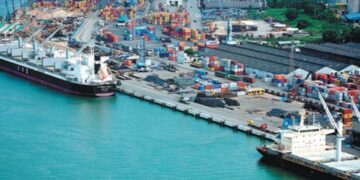
There are more rail deals available. Additionally, Zijin Mining has obtained a concession to invest in and oversee Kigoma Port and its Malindi Terminal, while Tanzania has signed a $2.15 billion deal with Burundi and China Railway Engineering Group to construct a new line directly connecting the nation’s western mining regions to the port of Dar es Salaam. When taken as a whole, these agreements outline a rather well-thought-out plan: make Tanzania the logistical hub for a considerably larger portion of Central and East African mineral production, not just its own.
Regulation Catches Up with Ambition
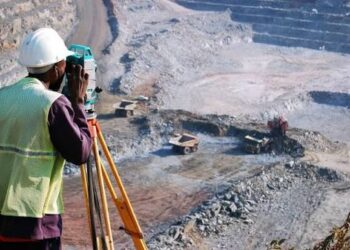
Weaknesses are sometimes revealed by rapid growth, and Tanzania’s government has been actively pursuing investment while also clearly tightening its own house. Citing both financial losses and the possibility of environmental degradation, authorities clamped down on mine developers in April who held undeveloped, abandoned, or badly managed permits. In an explicit effort to increase participation in a sector that has historically concentrated benefits among a small number of large operators, the government has indicated it will reallocate recovered mining blocks to women, youth, and people with disabilities. License holders who fail to develop their sites are now required to restore them to safe condition.
Beneath all of this lies a story about household content. Mining operations purchased about TZS 3.8 trillion worth of goods and services from local suppliers between July and December 2025 alone. This amount has been noted by regional analysts as proof that Tanzania’s mining boom is starting to develop actual domestic industrial capacity, not just extraction revenue, in a manner that neighboring Kenya has so far found difficult to match.
Why This Week Matters
A rail concession, a steel project, a presidential briefing, or a licensing crackdown would all be insignificant stories on their own. When taken as a whole, they depict a sector that is attempting to develop in real time: obtaining funding, constructing the necessary infrastructure to transport goods, tightening regulations on concession holders, and expanding the range of people who can profit from concessions. With a number of major projects, such as EcoGraf’s Tanzania Graphite Project, anticipated to make final investment decisions later this year and African Mining Week coming up in October, Tanzania’s mining industry appears less like a collection of isolated agreements and more like a nation positioning itself as the logistics and processing hub for the region’s vital minerals, just as the world’s demand for battery metals shows no signs of slowing down.