









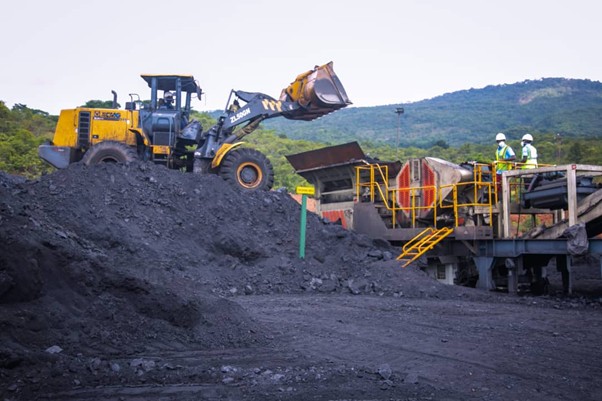
DAR ES SALAAM. Tanzania is moving ahead with a landmark $3 billion iron and coal development project, marking one of the country’s most significant industrial undertakings in recent years as it pushes to deepen domestic manufacturing and reduce dependence on imported industrial materials.


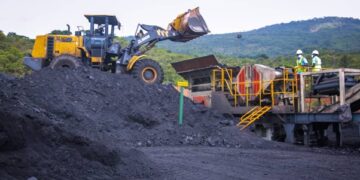
The mega‑project is expected to strengthen Tanzania’s heavy industrial capacity by integrating iron ore extraction, coal development, and large‑scale steel production into a single industrial value chain.
Analysts say the initiative could become a defining pillar of Tanzania’s broader industrial transformation strategy, with implications extending across infrastructure, construction, manufacturing, and regional trade competitiveness.
For investors, the project represents more than a mining story. It signals Tanzania’s growing ambition to establish a self‑sustaining industrial production base capable of supporting long‑term economic expansion.
A Structural Shift toward Industrial Value Addition
For decades, Tanzania’s mineral wealth has largely supported raw resource extraction, with much of the value‑added processing taking place outside the country.
The new integrated iron and coal project reflects a strategic shift toward capturing greater industrial value domestically. By linking extraction directly to steel processing and downstream manufacturing, Tanzania aims to build a more complete industrial ecosystem capable of supplying domestic and regional markets.
This would reduce reliance on imported steel and industrial inputs while strengthening local manufacturing competitiveness.
Steel Production at the Centre
The project is expected to support large‑scale steel output critical for Tanzania’s expanding infrastructure and construction sectors. Demand for steel continues rising as the country advances major projects including the Standard Gauge Railway expansion, port modernisation, industrial park development, energy infrastructure, and urban construction growth.
Domestic production capacity could significantly improve supply reliability while reducing import exposure and cost volatility. For industrial investors, this creates opportunities across processing, fabrication, logistics, and supply chains.
Industrial Spill over Potential
Heavy industry projects of this scale typically generate wider economic spillovers well beyond primary production. The integrated iron and coal initiative is expected to stimulate growth across engineering services, industrial transport, equipment maintenance, construction materials, and downstream fabrication industries.
It also strengthens prospects for Tanzania’s wider manufacturing ecosystem by providing more reliable access to core industrial inputs. Analysts say this could materially improve Tanzania’s industrial competitiveness over the medium term.
Regional Positioning Strengthens Tanzania’s Case
Within East Africa, few economies possess the combination of mineral resources, energy development momentum, and infrastructure expansion required to support integrated heavy industry at scale.
This gives Tanzania a potentially significant first‑mover advantage. As regional demand for steel and industrial materials grows, Tanzania could increasingly position itself as a supply hub serving neighbouring markets including Uganda, Rwanda, Burundi, the Democratic Republic of the Congo, and Zambia. This regional dimension materially strengthens the long‑term investment case.
Execution Will Determine Investor Confidence
As with all mega‑industrial projects, commercial success will depend on execution. Investors will closely watch infrastructure readiness, energy supply reliability, financing structures, operational timelines, and downstream integration strategy.
The scale of the project makes delivery discipline critical. If executed effectively, it could become one of Tanzania’s most transformative industrial assets.
Growth Prospects
The $3 billion iron and coal project reflects Tanzania’s broader shift from commodity extraction toward industrial production and value addition.
Combined with ongoing investments in energy, logistics, and manufacturing infrastructure, it reinforces the country’s push to build a more diversified industrial economy.
For investors, the signal is clear: Tanzania is moving beyond resource potential and beginning to lay the foundations for heavy industrial scale.