









Most countries build one flagship airport per generation. Tanzania is currently building — or substantially upgrading — five at once, while simultaneously relaunching a long-dormant international route, expanding its national carrier’s fleet, and quietly achieving something aviation regulators rarely get credit for: full radar coverage of an entire national airspace. This week’s transport news makes clear that Tanzania has decided aviation isn’t a supporting act to its tourism and mining ambitions — it’s infrastructure the whole growth strategy depends on.


A Capital City Finally Gets Its Own Airport
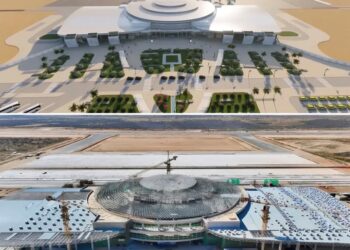
The most significant single project is Msalato International Airport, rising roughly 14 kilometres north of Dodoma — the city that has been Tanzania’s official capital for years but has lacked aviation infrastructure to match that status. The build includes a 3.6-kilometre runway, a modern passenger terminal, aircraft aprons, taxiways, a control tower, and full supporting infrastructure, with capacity for up to 1.5 million passengers annually once complete. Test landings by Air Tanzania aircraft have already taken place, and government inspections have confirmed the project is on track for operations to begin this September — meaning Dodoma is weeks away from finally having an international gateway befitting its political status.
It isn’t the only airport in motion. Kigoma Airport, serving the Lake Tanganyika corridor in western Tanzania, had reached roughly 60 percent completion by June 2026, with a full runway and apron rehabilitation, a new passenger terminal, and expanded parking facilities designed to strengthen trade and tourism links with neighboring countries. Mwanza Airport is separately being positioned for international status, while smaller allocations are funding upgrades at Arusha as well.
The Money Behind the Movement
None of this is happening quietly or cheaply. Tanzania’s parliament has approved a TZS 2.746 trillion budget for the Ministry of Transport for the 2026/27 financial year — reported elsewhere as a roughly Sh2.87 trillion, or $1.1 billion, package with aviation as one of the single biggest beneficiaries. The breakdown gets specific fast: TZS 32 billion for runway upgrades, airfield lighting, and security infrastructure at Kilimanjaro International Airport; TZS 26.75 billion for terminal improvements, ICT systems, and runway safety work at Julius Nyerere International Airport in Dar es Salaam; and smaller but meaningful allocations for Mwanza and Arusha.
Air Tanzania itself is getting a direct injection of TZS 283.05 billion (about $109 million) — split between TZS 185.32 billion for aircraft acquisitions, spare engine procurement, and maintenance facility rehabilitation, and a further TZS 97.73 billion for a new maintenance hangar, cargo facilities, pilot training simulators, and — notably — a new passenger terminal in Dar es Salaam designed for 2.5 million passengers a year.
Dubai to Zanzibar, Direct
While the infrastructure spending sets up the next several years, one very concrete win landed already: Air Tanzania has officially launched direct flights between Dubai and Zanzibar, restoring a connection between the Middle East and the Tanzanian coast that Transport Minister Prof. Makame Mbarawa described as central to the government’s broader push on connectivity. The route resumption sits alongside the airline’s continued expansion elsewhere — flights already operating to Moscow and Seychelles, with more international routes reportedly in the pipeline — and reflects a deliberate strategy of building Air Tanzania’s long-haul network route by route, rather than waiting for a single dramatic fleet overhaul.
The Radar Story Nobody Outside Aviation Circles Noticed
Buried beneath the airport and route headlines is a genuinely striking technical achievement: the Tanzania Civil Aviation Authority now reports full radar coverage of the country’s entire airspace, up from just 25 percent in 2019. That leap followed a TZS 67 billion investment in new radar systems across four major airports — infrastructure that doesn’t generate a ribbon-cutting ceremony the way a new terminal does, but which underpins everything from flight safety to the country’s ability to manage a much busier sky as passenger and cargo traffic keeps climbing.
And climbing it is. Passenger traffic has risen from about three million travellers in 2020 to nearly 6.8 million currently — more than double in five years — while air cargo volumes have grown alongside it as aviation facilities and services improve. TCAA has also signed Bilateral Air Services Agreements with 85 countries, with 17 airlines currently operating in Tanzania across 214 registered aircraft, and the country ranked fourth in Africa in the International Civil Aviation Organisation’s most recent security audit.
Aviation as the Connective Tissue
Deputy Minister for Transport David Kihenzile made the strategic logic explicit during a recent tour of transport institution pavilions at the Dar es Salaam International Trade Fair: aviation improvements, he said, are meant to complement — not compete with — Tanzania’s major rail projects, including the Standard Gauge Railway, TAZARA, and the Meter Gauge Railway. Framed together, the message is that Tanzania sees air, rail, and port infrastructure as one integrated system aimed at a single goal: becoming a genuine regional transport and trade gateway, not just a well-connected tourist destination.
That framing matters when you set it against everything else in the news this month — the mining sector’s rail deals to move minerals to port, the Tanga energy hub negotiations, the agricultural export targets. Aviation is the piece of infrastructure that ties a lot of these ambitions together: it’s how investors fly in for the fintech festival, how avocado exporters eventually reach distant markets by air freight, and how a mining executive gets from Dar es Salaam to a project site in the Western Circuit in hours rather than days.
The Bigger Picture
The sector’s own numbers make the ambition legible: aviation’s contribution to Tanzania’s GDP has grown from 0.8 percent in 2018 to 2.5 percent in 2023, with sector employment up 47 percent since the pandemic to around 10,000 jobs. Those are still modest absolute figures for an economy the size of Tanzania’s — but the trajectory, combined with the sheer number of simultaneous airport projects underway, suggests a government that has concluded aviation is no longer a nice-to-have supporting the tourism industry. It’s infrastructure the entire trillion-dollar Vision 2050 growth story is quietly being built on top of.