












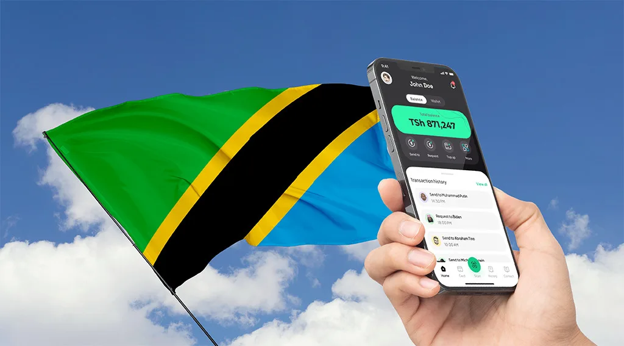
When a nation chooses to host the largest discussion about the future of money in the region, it exudes a certain level of confidence. Tanzania is doing just that this month, and enough banking and fintech news has already surfaced in the run-up to the event to cover an article by itself.


The Festival Everyone’s Talking About
The seventh edition of Fintech Festival Tanzania is scheduled for August 20–21 at the Julius Nyerere International Convention Center in Dar es Salaam. Approximately 10,000 leaders, policymakers, innovators, and transformation executives from over 120 countries are anticipated to attend. Minister Angellah Kairuki will formally open the festival, which is being organized by Mikono Expo Group with support from the Tanzania Investment and Special Economic Zones Authority, the Ministry of Information, Communication and Information Technology, the Dar es Salaam Stock Exchange, and the ICT Commission. It is anticipated that Kairuki will discuss regional policy, digital infrastructure, and cross-border financial frameworks.
The event isn’t standing alone — it runs alongside the Future Banking Conference Africa, Future Blockchain Africa, the Cashless & Card Expo Tanzania, and the Tanzania ICT Expo, all under one roof. Between them, the themes on the agenda read like a checklist of where financial services are headed globally: open APIs, embedded finance, core banking modernization, automated underwriting, cross-border payment rails, and digital identity. It’s a lot of ground to cover in two days, which is arguably the point — Tanzania is positioning Dar es Salaam as a place where the entire regional financial technology conversation happens at once, rather than being scattered across separate events in Nairobi, Kigali, or Lagos.
The Sandbox Doing Quiet Work in the Background
The Bank of Tanzania has been performing more consistent, unassuming work underneath the event, which will garner media attention. Applications for the central bank’s Fintech Regulatory Sandbox, which is currently in its third cohort and invites banks, mobile money providers, electronic money issuers, and fintech companies to test new financial products under close supervision prior to their release onto the open market, concluded on July 31. It is a purposefully conservative approach: the sandbox allows the regulator and innovator to work out the kinks together first, covering only services not already covered by existing regulations, as opposed to regulating fintech innovation after the fact, once products are in the hands of customers.
A more forceful monetary policy hand coexists with that regulatory patience. The Bank of Tanzania raised its Central Bank Rate from 5.75 to 6.25 percent for the third quarter in a July 2026 Monetary Policy Committee statement. This move was specifically intended to contain inflation caused by high energy, fertilizer, and transportation costs linked to ongoing geopolitical tension in the Middle East. It serves as a reminder that Tanzania’s fintech aspirations are not developing in a vacuum of pure innovation, but rather against the backdrop of actual, imported economic pressure.
The Numbers Behind the Optimism
The underlying statistics on the banking sector helps to explain why Dar es Salaam is receiving so much attention from around the world this month. The Bank of Tanzania’s 2025 Financial Stability Report states that total banking sector assets increased by 23.8 percent to approximately TZS 77 trillion, while private sector credit increased by 23.5 percent. Credit to the mining sector increased even more quickly, at over 30 percent, a sign of the mineral investment boom that is occurring elsewhere in the economy this year. Throughout 2024, the sector’s capital adequacy remained above regulatory minimums, indicating relative stability despite the acceleration of credit growth.
Naturally, Tanzania’s fintech history dates back to 2008, when Vodacom introduced M-Pesa, the first mobile-phone-based bill payment and money transfer service in East Africa. This year, Vodacom Tanzania launched Africa’s first mobile-money tap-to-pay service, which allows customers to tap a phone at a point-of-sale terminal in the same way that contactless bank cards operate worldwide. Almost twenty years later, that early mobile money infrastructure has grown into the basis of a much wider ecosystem, including digital loans, mobile-based insurance products, investment platforms, and more.
Inclusion, Not Just Innovation
Tanzania’s financial technology push is not just about slick new banking products for those who already have bank accounts, as demonstrated by a similar event earlier this month. Tanzania’s Ministry of Finance, the Bank of Tanzania, FSDT Tanzania, microfinance associations from Rwanda, Zimbabwe, Zambia, Senegal, and Nigeria, as well as fintech companies developing tools to reach populations still outside the formal banking system, were among the attendees of the fourth Microfinance Technology Summit, which was also held at JNICC and focused specifically on financial inclusion.
The formalization of Community-Based Savings Groups, which has assisted previously marginalized urban and rural populations in gaining group access to banking services, developing savings habits, and obtaining loans at mutually agreed-upon rates—an informal financial infrastructure that fintech innovation is increasingly being designed to plug into rather than replace—connects to the inclusion focus that Tanzania has been developing at the community level for years.
The Bigger Picture
The formalization of Community-Based Savings Groups, which has assisted previously marginalized urban and rural populations in gaining group access to banking services, developing savings habits, and obtaining loans at mutually agreed-upon rates—an informal financial infrastructure that fintech innovation is increasingly being designed to plug into rather than replace—connects to the inclusion focus that Tanzania has been developing at the community level for years.