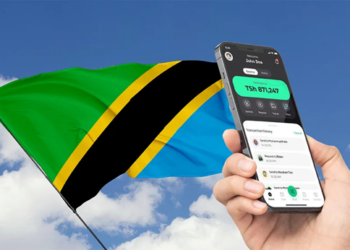











Dar es Salaam spent two days last week hosting what has become East Africa’s largest gathering of financial technology professionals. The Fintech Festival Tanzania 2026 ran from August 20–21 at the Julius Nyerere International Convention Centre, drawing together banks, mobile money operators, regulators, investors and startups from across the region. For a country that has quietly become one of Africa’s most interesting digital-finance stories, the timing could not have been better.


What the Festival Brought Together
Organized by Mikono Expo Group, the event combined an exhibition floor of roughly 70 fintech and technology companies, keynote addresses from government and industry leaders, masterclasses, a startup pitch competition, and an awards gala dinner. Sessions covered the themes shaping finance across the region right now: digital and cashless payments, artificial intelligence in banking, blockchain, fintech regulation, fintech-powered insurance, and even how East Africa’s surplus renewable energy can support digital infrastructure.
It didn’t happen in isolation. The festival ran alongside co-located events the Future Banking Conference Africa, Future Blockchain Africa, Cashless & Card Expo Tanzania, and the Tanzania ICT Expo turning JNICC into a single hub for nearly every corner of the region’s digital finance conversation. Supporting partners included the Tanzania Investment and Special Economic Zones Authority, the Ministry of Information, Communication and Information Technology, the Dar es Salaam Stock Exchange, and the ICT Commission a lineup that signals this is treated as economic policy, not just a trade show.
The Backdrop: Tanzania Is Already a Mobile-Money Powerhouse
The festival’s relevance is easier to see against what’s actually happening in the market. Tanzania’s mobile money ecosystem processed over 2.1 billion transactions in the quarter ending June 2026 alone, through more than 87 million active accounts a number that has grown by nearly 23% a year over the past four years. Survey data puts mobile money usage among the population at roughly 94%, with people relying on it daily for sending money, receiving payments, and settling bills. The Bank of Tanzania reports that close to 90% of citizens can now reach a financial access point within five kilometers, largely thanks to mobile money agents and the Tanzania Instant Payment System (TIPS), which now links banks and wallets together.
The economy around this is growing too: GDP is projected to expand by roughly 6% this year, and the government has set an ambitious “Dira 2050” target of reaching a trillion-dollar economy. The government has also been actively trying to lower the cost of mobile transactions and has licensed well over 100 electronic payment providers, deliberately pushing more competition into the space.
But the country’s own regulators are the first to point out where the gaps remain. Bank of Tanzania officials have noted that while access to financial services has improved dramatically, usage of more advanced products savings, insurance, pensions, productive credit still lags. Small and medium enterprises, despite driving much of the country’s employment, continue to struggle to access formal financing. Women and informal-sector entrepreneurs are disproportionately affected. In other words: Tanzania has largely solved the “access” problem. The next problem is depth.
Where the Real Opportunity Sits
This is exactly the gap an event like the Fintech Festival is positioned to help close, in a few concrete ways:
1. Turning access into productive credit for SMEs. Small businesses are central to Tanzania’s job creation but are chronically underserved by formal lenders. Fintechs specializing in AI-driven credit scoring, alternative data, and digital lending have direct incentives to find these businesses at an event built around exhibitors, banks, and investors in the same room. Deals and partnerships struck on the exhibition floor can translate into working capital reaching businesses that banks have historically been unable to underwrite profitably.
2. Attracting capital and cross-border interest. Bringing global investors, regional regulators, and technology providers to Dar es Salaam does something a policy paper can’t: it puts Tanzania on the map for people deciding where to deploy fintech capital next. Neighboring markets have already demonstrated how a strong regional fintech identity Kenya’s mobile-money legacy, or Zanzibar’s push to attract tech talent can pull in investment and skilled jobs. A well-attended annual festival, run alongside co-located banking and blockchain conferences, builds exactly that kind of reputation over time.
3. Feeding the regulatory sandbox with real ideas. The Bank of Tanzania’s Fintech Regulatory Sandbox is now in its third cohort, inviting banks, mobile network operators, e-money issuers, and fintech companies to test new products under supervision. Festivals like this are natural recruiting grounds for that pipeline a startup pitch competition and an exhibition hall full of new products is a direct source of candidates for sandbox testing, and a chance for regulators to hear what founders actually need before writing the next rulebook.
4. Formalizing the informal economy. With mobile money now functioning as core infrastructure rather than a side channel, the opportunity is to layer new services savings products, micro-insurance, pension contributions, digital trade finance on top of rails that almost everyone already uses. Sessions at the festival specifically addressing how digital finance drives outcomes for agriculture, SMEs, and trade point directly at this: farmers being paid digitally for cashew, cotton, or coffee are a template for pulling more of the informal economy into a system that can be measured, taxed fairly, and extended credit against.
5. Building local talent and skills. Masterclasses and panel sessions aren’t just PR they’re one of the few structured venues where Tanzanian developers, compliance officers, and product managers get direct exposure to how AI, blockchain, and cybersecurity are being applied elsewhere. For a country trying to build a domestic tech workforce rather than just import it, that knowledge transfer compounds over time.
6. Using surplus energy as an economic asset. The festival’s inclusion of a session on how East Africa’s renewable energy surplus can support digital innovation points to a less obvious but real opportunity: positioning Tanzania’s power capacity as an input for data centers, cloud infrastructure, and digital services, rather than only exporting the power itself.
The Bottom Line
None of this happens automatically just because an event took place. The value of the Fintech Festival Tanzania lies in what gets built afterward the partnerships signed, the sandbox applications filed, the SME lending products actually launched, the investors who follow up. But the ingredients were genuinely in the room: regulators who have been candid about where inclusion still falls short, a fast-growing mobile money base that gives any new product instant distribution, and a government actively courting fintech investment as part of a much larger growth ambition. If even a fraction of the conversations from those two days in Dar es Salaam turn into real products reaching Tanzanian SMEs, farmers, and underserved households, the festival will have done its job not as a showcase, but as infrastructure for the next stage of the country’s financial inclusion story.