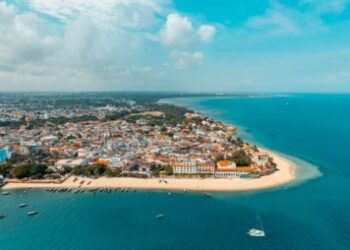














In tandem with Tanzania’s increasing tourism, the government has imposed a new fee at the border. The majority of foreign travelers have been required to purchase mandatory inbound travel insurance from October 1. The dilemma for tourism investors is straightforward: does a place that sets records have the pricing capacity to absorb a new charge? Travel trade outlets re-ran the regulations this week.


The Rule
Published as Government Notice No. 256 on September 4, the Insurance (Inbound Travel Insurance) Regulations, 2026 became operative on October 1. In order to enter Tanzania’s mainland, eligible international travelers must get insurance from the National Insurance Corporation (NIC). Up to 92 days of coverage are included in the regular price, which is $44 per visitor. The Zanzibar Insurance Corporation (ZIC) is where arrivals in Zanzibar purchase insurance. NIC states that, subject to certain conditions, a person who purchases coverage on the mainland can proceed to Zanzibar without a second policy.
Several points matter for planning:
- A qualifying tourist who arrives without the necessary cover may be rejected entry, according to trade reports.
- Current insurance is insufficient: Having extensive private travel or health insurance does not automatically meet the requirements, and the required coverage might not be able to replace it.
- Legal foundation: The Finance Act of 2025 amended Section 134A of the Insurance Act.
- Who pays: In 2025, the finance minister declared that people of the Southern African Development Community and the East African Community will be exempt. Visitors should verify their eligibility right now.
- A delayed start: Although the rule was initially scheduled to take effect in January 2026, it actually started in October.
The Market It Lands In
The sector’s strength makes the timing noteworthy. According to data from trade reports, Tanzania saw 2.29 million foreign visitors in 2025 and $4.41 billion in tourism revenue, a 13 percent increase. As discussed in our July report, Zanzibar’s June arrivals also increased over the prior year. To put it briefly, a new fee is most likely to be absorbed when demand is strong.
The Worry: Stacking Costs
There is a cumulative risk. The EastAfrican warned last year that a trip to Tanzania may cost more than $200 more per visitor in 2026 than it did in 2024 due to a combination of new fees that hoteliers and airlines feared would drive tourists elsewhere. A passenger facilitation fee of $45 one way or $90 return for foreign travelers was announced starting November 1 of that year, according to the same article. Investors should check what is charged today because I was unable to validate its present condition from the sources I looked at.
The $44 itself is not as problematic for operators as the other costs associated with park fees, visas, taxes, and flights. Before any other fees, a family of four must pay $176 for insurance alone.
Zanzibar’s Separate Compliance Deadline
On November 2, hotels in Zanzibar had to deal with their own transformation. According to updated tax administration regulations, lodging operators must now use a property management system recognized by the Zanzibar Revenue Authority and integrated with the authority’s electronic Virtual Fiscal Management System. Approval was also required for software providers that catered to the industry. Businesses whose systems did not comply may need to improve or replace them, according to PwC Tanzania. Tighter regulation of tax reporting, including VAT claims, is the overarching goal.
This entails a one-time technological expense for hotel investors as well as improved visibility for the tax authorities, which may be important when evaluating a property’s reported revenue.
What Investors Should Weigh
- Demand elasticity: Whether or not arrivals continue to rise during December’s peak season. The first proof will be early booking and arrival statistics for October and November.
- Source markets: Travelers who compare Tanzania with Kenya and those from price-sensitive economies may respond differently.
- Revenue from insurance: Both providers are connected to the state. For example, the gross premium pool would be about $100 million if each arrival in 2025 had paid $44. Treat this as an upper bound rather than a forecast because it will actually be lower due to exemptions and other visitor groups.
- Operational friction includes clear communication with travelers, internet buying platforms, and airport processing. A warning indicator would be reports of delays or denied access.
- Competitive reaction: Do nearby locations also impose stricter regulations? Kenya and other African nations have also been tightening insurance and entry restrictions, according to trade reports.
The Bigger Picture The two components of Tanzania’s tourism plan work against each other: increasing arrivals to all-time highs and increasing income per tourist. The second group includes the insurance rule. Whether or not arrivals continue to increase throughout this peak season will probably be the only metric used to assess it. If they do, Tanzania would have demonstrated to lodging, hotel, and airline investors that it can increase entry costs without losing demand. The rule will be added to the list of costs that the sector has cautioned about if development slows.