












LONDON. Tanzania has intensified its campaign to attract international investment after unveiling plans for the private sector to finance the majority of its ambitious US$1 trillion Development Vision 2050, positioning global investors at the centre of the country’s next phase of economic transformation.


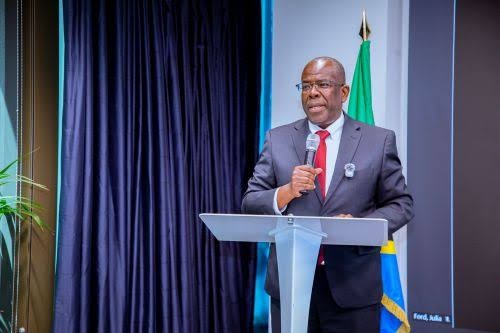
The investment pitch was delivered by Minister for Finance, Ambassador Khamis Mussa Omar (MP) during the Tanzania Strategic Investment Roundtable in London, where he met international fund managers, institutional investors, and development finance leaders to showcase opportunities across infrastructure, energy, logistics, and industrial development.
“Development Vision 2050 is expected to require investments of approximately US$1 trillion, with around 70 percent of the financing expected to come from the private sector,” Ambassador Khamis told investors.
Private Capital Takes Centre Stage
The financing strategy marks one of Tanzania’s strongest commitments yet to leveraging private investment for national development.
Rather than relying predominantly on public borrowing or government expenditure, the country plans to mobilise private capital to finance large‑scale infrastructure and productive sectors over the next 25 years.
Priority investment areas include the Standard Gauge Railway, electricity generation and transmission networks, deep‑water ports, logistics corridors, industrial parks, digital infrastructure, and strategic manufacturing industries.
Officials said these investments are expected to improve regional connectivity, strengthen industrial competitiveness, and support Tanzania’s ambition to become a trade and logistics hub serving East, Central, and Southern Africa.
Creating Long‑Term Investment Opportunities
The London roundtable formed part of Tanzania’s broader strategy to attract long‑term institutional capital from global pension funds, sovereign wealth funds, infrastructure investors, and private equity firms.
Government officials highlighted Tanzania’s stable macroeconomic environment, expanding transport infrastructure, strategic Indian Ocean coastline, and access to regional markets through the East African Community (EAC) and the African Continental Free Trade Area (AfCFTA).
The investment framework also emphasises greater use of Public‑Private Partnerships (PPPs) to accelerate project delivery while sharing risks between the public and private sectors.
Investor Outlook
For international investors, Development Vision 2050 represents one of the largest long‑term investment pipelines currently being developed in Africa.
Opportunities are expected to span transport infrastructure, renewable energy, utilities, affordable housing, industrial manufacturing, logistics, mining support services, healthcare infrastructure, and digital connectivity.
As Tanzania positions private investment as the principal engine of its long‑term growth strategy, the country is signalling a shift towards deeper collaboration with global capital markets to finance transformative projects.
For investors, the message is clear: Tanzania is not simply seeking foreign investment, it is inviting global private capital to become a long‑term partner in delivering a US$1 trillion vision for economic transformation.