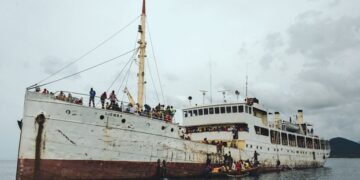










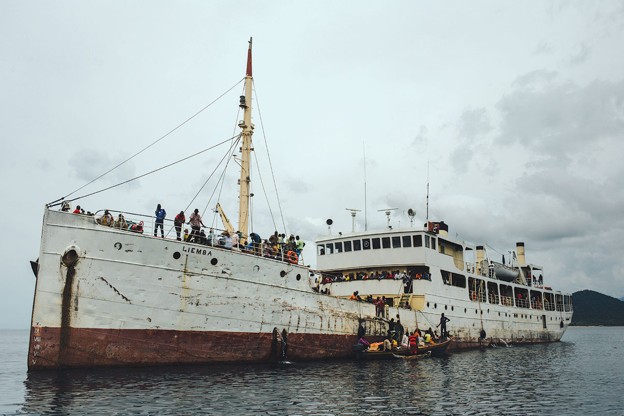
There are not many ships in the world with resumes like this one. Constructed in Kiel, Germany, in 1913 under the name Graf von Goetzen, it was transported to Lake Tanganyika in sections and put together by hand on its shore. It was used as a German military vessel during World War I, renamed Liemba (the Fipa word for “water”) in 1957, and given to the Tanganyika government in 1961. It is once again transporting passengers this week, following over eight years of being confined and silent.


The Voyage That Restarted a Region
The MV Liemba formally resumed its international voyage on Tuesday, October 6, leaving Kigoma at 10:00 PM for Kalemie in the Democratic Republic of the Congo. The relaunch comes after a TZS 34 billion (about $12.9 million) state-funded renovation that started in July 2024 and was completed by the Croatian shipyard Brod split in collaboration with the Dar es Salaam Merchant Group. For the first time since it was removed in 2018 owing to worn-out engines and decaying equipment, the ship’s horn sounded over the lake in mid-August. Sea testing and regulatory permission from the Tanzania Shipping Agencies Corporation cleared the way for commercial service.
The improvement is significant. In addition to navigation enhancements, the ship has been outfitted with two new main engines and new generators to power onboard operations. The work was done from hull to bridge. Liemba can transport 200 tons of cargo and about 600 passengers per trip once it is fully functioning. The ship has been built to serve for an additional 50 years, according to Transport Minister Prof. Makame Mbarawa. This is an impressive statement for a ship that is already over its centenary. The project’s engineers emphasized that the work was completed while preserving the ship’s legacy, which is crucial for a vessel that serves as both a functional conveyance and a historic artifact.
Why Eight Years Mattered
Liemba’s return is a heritage tale to outsiders. It is first and foremost a logistical issue for those who reside near the lake. The ship has been transporting people and commodities across a 673-kilometer stretch of water to connect isolated lakeside settlements for more than a century in an area with no road development. Residents of the Kigoma, Katavi, and Rukwa regions have been most affected by the gap. The minister himself admitted that one of the topics that plagued the government the most in Parliament was the subject of when Liemba would return, with MPs from all three regions persistently demanding an explanation.
One local summed up the stakes simply: life got difficult when Liemba stopped operating; the ship’s fares were reasonable, and passengers believed it to be safe. In an area where alternatives may be expensive or unreliable, those two attributes are not insignificant.
A Ship with a Complicated Past and a Practical Present
The history of the ship is as complex as the topography of the lake. Originally designed as a German military transport, it was later utilized to ferry people instead of weaponry, such as during refugee repatriation operations on Lake Tanganyika in the 1990s. It is now frequently cited by academics and travel writers as a unique example of colonial-era heritage transformed into practical public infrastructure. The reactivation is part of a larger plan to establish Kigoma as a commercial and logistical hub connecting Tanzania with Burundi, the Democratic Republic of the Congo, and Zambia, all of which share the lake, according to the Tanzanian government’s far more forward-looking narrative.
This idea aligns well with a theme that permeates this year’s coverage, from rail transactions in the mining industry to Tanzania’s trade strategy: facilitating the economical movement of people and products across borders. Liemba is a tiny, ancient, and unique component of that apparatus.
Part of a Bigger Water Transport Push
The Liemba renovation is part of a larger lake-transport program at TZS 48 billion. Observers said they will evaluate if the Liemba model can be repeated across Tanzania’s inland waterways. Other vessels in that program, such as MT Ukerewe and MT Nyangumi on Lake Victoria, are still to be constructed. This week, the topic of lake transport safety has returned to the news for more depressing reasons: a ship caught fire on Lake Nyasa, resulting in reports of three fatalities and the rescue of over forty people. This serves as a reminder that modern safety measures and regulatory approval are just as important as engines and hulls.
The Bigger Picture
In a week largely dominated by IMF-World Bank meetings, gaps in climate money, and port investment news, it would be easy to dismiss the homecoming of a 113-year-old ship as a lovely footnote. However, stories about infrastructure are rarely more concrete than this one. The first paying passengers boarded again this week after the government spent TZS 34 billion to restore a region that had been without a core transit link for eight years. Over the course of the upcoming year, cargo tons and ticket sales will be used to gage if Liemba fulfills the promises officials attach to it: cheaper trade, a stronger Kigoma, and a model for other lakes. For the time being, the measure is more straightforward: when the horn on Lake Tanganyika sounds once more, individuals who have been waiting for Finally, ten years can join in.