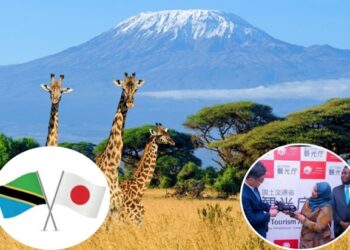












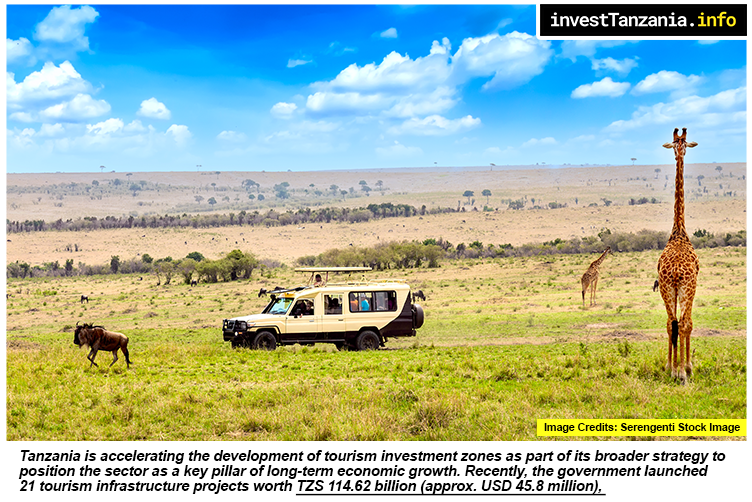
DAR ES SALAAM – Tanzania is accelerating the development of tourism investment zones as part of its broader strategy to position the sector as a key pillar of long‑term economic growth. Most recently, the government launched 21 tourism infrastructure projects worth TZS 114.62 billion (approx. USD 45.8 million), marking a significant expansion of the country’s southern tourism circuit.


The projects, implemented under the Strategic Southern Tourism Circuit Development Programme, span major conservation areas including Nyerere National Park, Ruaha National Park, Mikumi National Park, and the Kilombero Nature Forest Reserve. At the centre of this expansion, the government inaugurated Mtemere Airport inside Nyerere National Park, creating a dedicated air access point to a region that has historically remained underdeveloped despite its ecological significance.
Unlocking a High‑Potential Corridor
Historically, Tanzania’s tourism sector has been concentrated in the northern circuit, particularly the Serengeti‑Ngorongoro ecosystem. However, the southern circuit offers vast untapped potential, characterized by larger, less crowded parks and diverse wildlife. As a result, the government is shifting focus toward developing these assets into structured tourism investment zones.
The new infrastructure, including visitor centres, ranger posts, accommodation facilities, and transport systems, is designed to reduce access barriers and improve visitor experience. Consequently, this creates opportunities for private investors in safari lodges, eco‑resorts, charter services, conservation ventures, and hospitality logistics.
Rising Tourist Arrivals
At the same time, Tanzania’s tourism sector is experiencing strong recovery. Under President Samia Suluhu Hassan, international arrivals have surged by 149%, reaching over 2.29 million visitors in 2025. This growth trajectory, combined with targeted infrastructure investments, is strengthening Tanzania’s position as a scalable tourism destination capable of handling higher visitor volumes.
For investors, this translates into increasing occupancy potential, higher visitor throughput, and improved returns on tourism infrastructure assets.
Regional Competition
Meanwhile, competition across East Africa remains strong. Kenya dominates high‑end safari tourism with global brand recognition, particularly in the Maasai Mara. Rwanda has positioned itself as a luxury eco‑tourism destination, leveraging gorilla trekking and conservation branding.
However, Tanzania offers a differentiated value proposition. While competitors focus on premium, high‑cost models, Tanzania provides scale, diversity, and relatively lower entry costs. Moreover, its extensive protected areas among the largest in Africa allow for large‑scale projects that are difficult to replicate in more saturated markets.
Policy Direction and Investor Outlook
Importantly, the government has signalled continued support for private sector participation. Tourism is prioritized alongside mining and energy under Vision 2050, with practical measures including transport expansion, new circuits, investor incentives, and public‑private partnerships.
Looking ahead, Tanzania’s southern circuit expansion represents a strategic shift toward unlocking new tourism frontiers. Taken together, the country offers untapped destinations, rising demand, improving infrastructure, and competitive entry costs.
Ultimately, Tanzania is not only expanding its tourism infrastructure but also redefining its investment landscape, offering scale, policy support, and growth momentum that position it among East Africa’s most compelling tourism markets.