












The International Monetary Fund (IMF) has projected that Tanzania’s economy will grow by 5.9 percent in 2026, underscoring the country’s resilience even as geopolitical tensions in the Middle East continue to shake global markets.


According to the IMF, Tanzania has managed to withstand external shocks linked to rising oil prices, disrupted supply chains, and broader global uncertainty. However, the institution warned that spillover effects from the Middle East conflict could still place pressure on inflation, trade flows, and fiscal stability.
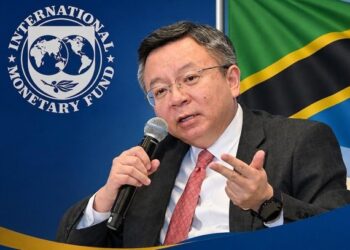
The forecast was released following an IMF mission to Tanzania led by IMF mission chief Nicolas Blancher, who held discussions with government officials under the country’s Extended Credit Facility (ECF) and Resilience and Sustainability Facility (RSF) programmes.
If the ongoing programme reviews are approved by the IMF Executive Board, Tanzania could access approximately $375.5 million in additional financing support.
The IMF expects inflation to rise moderately to 4.7 percent in 2026, while the current account deficit is projected to widen to 2.9 percent of GDP due to higher global energy and fertiliser prices. Key sectors such as agriculture, tourism, and transport are expected to feel the effects of elevated costs and disrupted international logistics.
Despite these challenges, the Fund maintained a positive medium-term outlook for Tanzania, forecasting growth could eventually reach 6.3 percent, supported by strong performance in mining, tourism, and agriculture. Gold exports are also expected to help cushion the economy against external shocks.
The IMF further encouraged Tanzania to continue strengthening domestic revenue mobilisation, public financial management, and investment reforms while accelerating implementation of the country’s Development Vision 2050 agenda. It also highlighted the importance of climate resilience investments and renewable energy expansion as part of long-term economic sustainability.
During the visit, IMF officials met with Finance Minister Khamis Mussa Omar, Bank of Tanzania Governor Emmanuel Tutuba, development partners, private sector representatives, and civil society stakeholders.
Importantly, the Fund highlighted Tanzania’s growing focus on climate resilience and renewable energy development as critical pillars for sustainable economic growth in the years ahead.
With strong sectoral performance, ongoing reforms, and support from international financial institutions, Tanzania continues to position itself as one of East Africa’s most resilient and promising economies despite an increasingly uncertain global environment.