









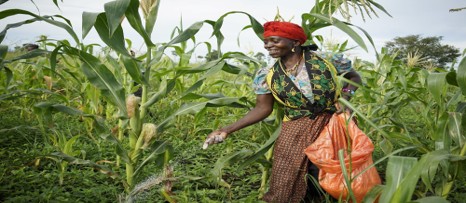
Tanzania’s agriculture industry, which is the nation’s biggest job and a major contributor to GDP, is going through one of its most important policy weeks in recent memory. The implementation of a five-year environmental action plan for farming and the operational launch of a new national extension agency are two significant institutional milestones that have occurred nearly simultaneously. Both come under the umbrella of Vision 2050, Tanzania’s long-term development plan that went into force this month and emphasizes tourism and agriculture as key pillars in the country’s quest for a trillion-dollar economy.


A New Extension Agency Goes Live
The National Agricultural Extension Services Agency (NAESA), which was approved by the Ministry of Agriculture and started operations this month, is the major institutional development for July. The mission of NAESA is to increase the overall effectiveness of agricultural advising services, convey research findings from scientists to field officers and farmers, and coordinate and oversee extension services across the country.
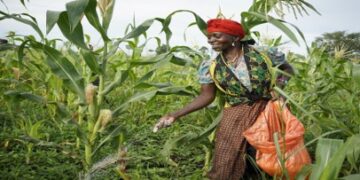
This is more important than it may seem for a sector where smallholders make up a significant portion of producers. Better seed types, pest control methods, and climate-adapted practices are actually brought to the field by extension services, which serve as the link between research institutes and the farmer with a hoe. The change was applauded by regional commissioners who met with the Ministry earlier this year. They described it as part of a larger initiative to transform agriculture from merely “the backbone of the economy” into a fully functional, professionally managed economic pillar.
Balancing Farms and Ecosystems
On July 9, the government unveiled the second phase of the Agricultural Sector Environmental Action Plan (ASEAP II), a five-year plan that would run through 2031, in Dodoma. Officials made it clear that the land, water, and forests that agriculture depends on cannot be sacrificed in the name of agricultural expansion. The Third Five-Year Development Plan, Vision 2050, and Tanzania’s climate obligations under the Paris Agreement are all intended to be directly impacted by the plan.
Environmental degradation-related concerns to concrete production were highlighted by ministry officials, who cited shifting planting seasons, altered rainfall patterns, and increased pest and disease pressure as factors already impacting yields. Sunflower production depends on healthy pollinator populations, thus even high-quality seed cannot produce its full yield potential without a functional surrounding ecosystem, according to one illustrative case given during the launch. Instead of considering conservation as an afterthought, the strategy commits the industry to ensuring that all farming activity, including irrigation schemes and new investment projects, conforms with environmental law.
The Numbers Behind the Push
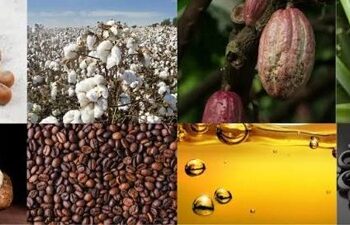
Real budget movement supports the institutional reforms. The amount allotted to Tanzania’s agriculture ministry for 2026–2027 is estimated to be TZS 1.105 trillion, a significant increase from nearly TZS 294 billion just five years ago. The production of traditional cash crops is expected to increase by 32.4 percent, from around 1.6 million tons in 2025–2026 to 2.12 million tons in 2026–2027. The majority of this output will come from cashew nuts, sugar, cotton, tobacco, coffee, sisal, tea, cocoa, and pyrethrum. In the 2025–2026 season, Tanzania alone produced more than 617,000 metric tons of cashews.
With output expected to reach 235,000 tons in 2026–2027, up from over 201,000 tons two years prior, and exports anticipated at 40,000 tons, avocados have become a flagship high-value export crop. In order to achieve that goal, the government intends to complete 20 avocado collection centers throughout the Southern Highlands, including eight in Mbeya and five in Njombe; distribute over 1.7 million subsidized avocado seedlings, with a specific focus on youth and women’s groups; and train 9,500 farmers and 500 extension officers in good agricultural practices.
The overall trend line is robust. Between 2021/22 and 2024/25, food crop output increased by over 39 percent under the outgoing Third Five-Year Development Plan, increasing the country’s food self-sufficiency from 126 to 130 percent. From $2.1 billion to $3.73 billion, agricultural exports nearly doubled during that time, accounting for 24.6% of GDP and expanding by 4% in 2025. It is now anticipated that horticulture, which is concentrated in the Southern Highlands, Northern Zone, Coast Region, Morogoro, and Lake Zone, will bring in about $2 billion from exports this year.
Foreign Investment Follows the Momentum
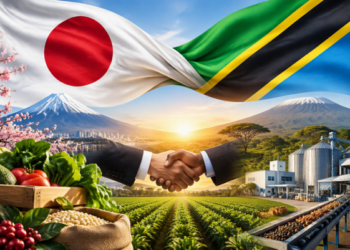
International capital is also drawn to the reform movement. Earlier this year, Al Dahra, an agribusiness corporation based in Abu Dhabi, and Tanzania’s Investment and Special Economic Zones Authority signed a $100 million memorandum of understanding to find land appropriate for irrigation-based, climate-smart commercial farming. As part of a larger pattern of government initiatives to attract foreign direct investment into underutilized arable land, the cooperation is anticipated to help Tanzania’s food security goals and establish guaranteed market linkages for smallholder farmers.
The Bigger Picture
This July is unique because of their alignment rather than any one declaration. Within weeks of one another, a five-year environmental plan to safeguard the natural resource base that farmers rely on, a new extension agency to expedite the delivery of better practices to farmers, and a national development vision that views agriculture as essential to a $1 trillion economic ambition will all be delivered. Similar to tourism’s Vision 2050 goals, the true test will be implementation: whether extension agents truly reach isolated farming communities, whether environmental protections can withstand the strain of swift commercial growth, and whether smallholders, not just large-scale investors, truly see a share of the benefits.