









Tanzania’s 1,424 kilometers of Indian Ocean coastline have been mostly used for fishing throughout the majority of the country’s history. In an effort to persuade the nation and the globe that the ocean is worth much more than that, the government expended an astounding amount of energy this September. The term “blue economy” kept appearing in a number of contexts, including a legislation reform, an anniversary, an international gathering, and a pod of migrating whales.


Rewriting the Rulebook
On September 14, the Revolutionary Government introduced the Fisheries Development and Marine Conservation Authority Bill, 2026, in the House of Representatives in Zanzibar, marking the most significant development. Suleiman Masoud Makame, the Acting Minister for Blue Economy and Fisheries, made it clear to the House that the 2010 Fisheries Act, which was drafted before the term “blue economy” even entered the government’s working language, is out of date and has serious flaws. The stated goal of the new bill is to put the blue economy idea into practice by increasing the value of marine products, establishing efficient market systems, and generating employment, all the while bolstering resource conservation, safeguarding endangered species, and maintaining beaches for future generations.
A minor but significant indication of real legislative give-and-take on a bill intended to regulate a sector worth actual money to the islands is that Zanzibar’s House committee reviewing the bill reportedly praised the government for being receptive to criticism and agreeing to a schedule of amendments rather than pushing the legislation through unaltered.
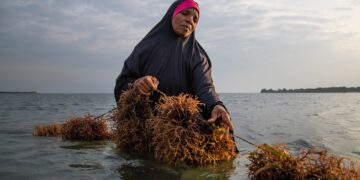
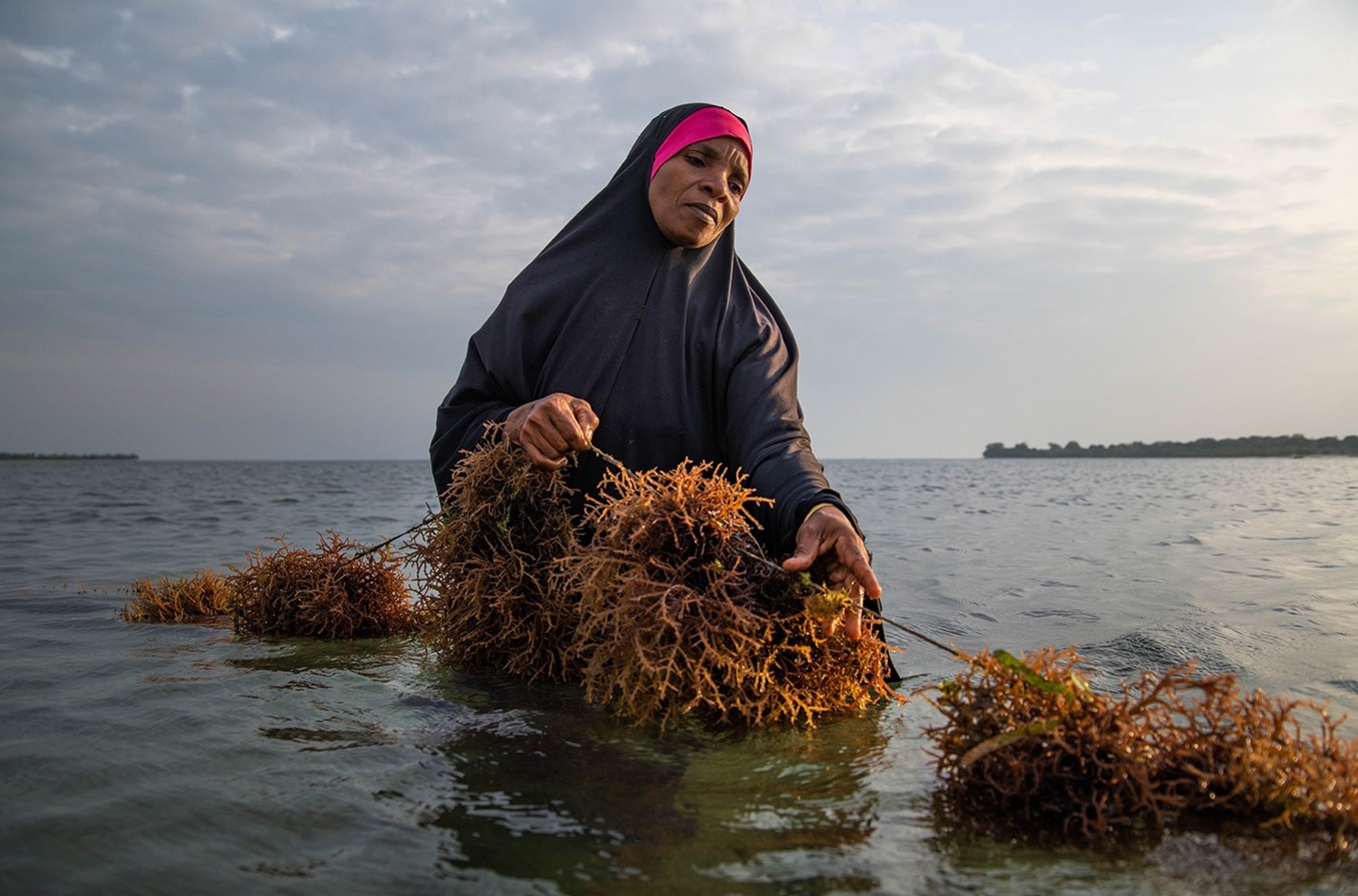
On a national scale, a comparable legal movement is in progress. Felix Chakila of the Ministry of Constitutional and Legal Affairs made the case at the Fifth International Blue Economy Conference in Dar es Salaam, which concluded on September 9, that if Tanzania is to grow its blue economy in accordance with Vision 2050, its domestic laws governing marine resources must be in line with international legal standards. Since then, the ministry has acknowledged that it is examining laws and regulations with the express purpose of removing obstacles to private investment. However, officials were cautious to emphasize that protections are being strengthened so that citizens, not just investors, benefit from natural wealth. The commercial sector already has a significant presence here: seaweed farming, marine fishing, and the production of marine-based products. The ministry cites this as proof that the blue economy is more than just a theoretical concept.
Thirty Years, and a Festival to Mark It
Tanzania took a moment this month to commemorate the past if the law reforms are about the future. Alongside the Mafia Island Festival on September 26, Utende in Mafia hosted a high-level panel discussion to celebrate 30 years of marine parks and reserves. As the sector’s guest of honor, Deputy Minister for Livestock and Fisheries Ng’wasi Kamani focused on topics that will sound familiar from nearly every other sector discussed this year: increased community involvement in conservation, broader use of technology for monitoring marine resources, adding value to fisheries products rather than exporting them raw, and drawing in new investment. Tan Trade’s value-addition argument on avocados and rice from last month is also applicable to the ocean economy: don’t just extract the resource; build something on top of it first.
Making the International Case
This month, Tanzania also presented its blue economy proposal overseas. During the September 16–18 Global Ocean Development Forum in Qingdao, China, Minister for Livestock and Fisheries Ambassador Dr. Bashiru Ally Kakurwa represented the nation and assisted in the establishment of the Global Initiative for the Ocean Decade Marine Public Welfare Action. Dr. Bashiru gave a direct presentation of Vision 2050 at the forum, highlighting Tanzania’s vast inland and coastal water resources as an underutilized foundation for growth and framing fisheries and the blue economy as real contributors to the country’s goal of becoming a $1 trillion, upper-middle-income economy. Additionally, the involvement is anticipated to strengthen Tanzania-China cooperation, particularly in ocean-related research and technology, adding a marine dimension to a bilateral connection that has frequently emerged. across this year’s mining, energy, and infrastructure coverage.
Where the Growth Is Actually Happening
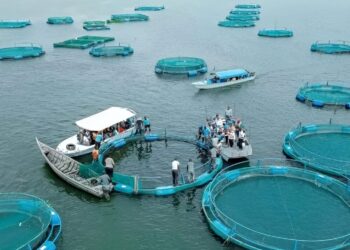
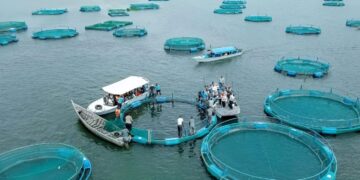
The blue economy’s most noticeable growth story to date is aquaculture. In addition to supporting laws pertaining to water, land, the environment, feed, and animal health, Nazael Amos Madalla, Director of Aquaculture at the Ministry of Livestock and Fisheries, cites the Fisheries Act and the Fisheries (Aquaculture) Regulations, 2024, as the existing legal framework. On the ground, the figures are precise: 536 fish cages worth TZS 12.574 billion have been given to 2,095 recipients along with fingerlings and food. According to Madalla, the more important question facing the industry is whether Tanzania can attract significant private investment to build on its initial momentum and bring it closer to the aquaculture sectors already present in other regions of Africa.
Additionally, nature has been assisting with the marketing campaign. The giant mammals have returned to the warm waters of Mnazi Bay in Mtwara during the annual whale migration season, creating new opportunities for marine tourism in addition to fishing. This serves as a reminder that the blue economy’s growth areas go far beyond the fish themselves and include hospitality, tourism related to conservation, and scientific research associated with the same coastline.
The Bigger Picture The sheer frequency of September’s blue economy drive is more noteworthy than any one statement. Within about three weeks of one another, Zanzibar’s law reform, Dar es Salaam’s legal harmonization push, Mafia’s 30th anniversary conservation forum, Qingdao’s international pitch, and Mtwara’s seasonal tourism opportunity all landed using the same vocabulary and pointing back to the same Vision 2050 target. Fishing has long brought in money from Tanzania’s ocean. In order to transform 1,424 kilometers of coastline from a single economic activity into multiple ones before the rest of the world decides where to allocate its own ocean investment funds first, the government is currently working to develop a sector that also generates income through research, tourism related to conservation, processed marine products, and seaweed farming