









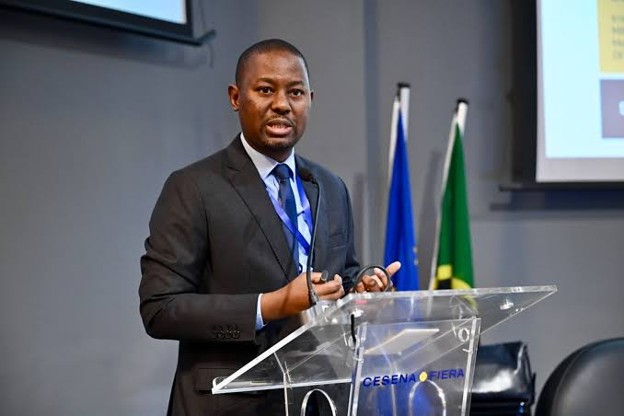
Cesena, Italy — The EU–Tanzania Investment and Business Forum 2026–2027 roadshow continued in Cesena, Emilia-Romagna, Italy, bringing together Tanzanian government officials, investment agencies and European businesses to explore investment opportunities in Tanzania.


The two-day event, held at Cesena Fiera, focused on agricultural value addition, renewable energy, electricity infrastructure and digital development. It provided a platform for Tanzanian institutions to present investment opportunities and engage with Italian companies interested in technology transfer, trade and commercial partnerships.
Agribusiness and Value Addition
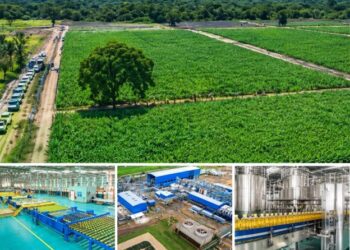
Deputy Minister of Agriculture Hon. David Ernest Silinde led discussions on investment opportunities in rice, cashew and coffee, with emphasis on irrigation, mechanisation, processing and technology. In Cashew processing, the USD 137 million Maranje Cashew Industrial Park was among the projects presented.
The delegation also visited Italian agribusiness companies, including Apofruit–Almaverde, Martini Group and Unitec. The visits provided an opportunity to examine agricultural technologies such as automated sorting, product grading, processing and post-harvest handling that could support improvements in Tanzania’s agricultural value chains.
Renewable Energy and Electricity Infrastructure
Tanzania presented opportunities in renewable electricity generation, transmission infrastructure and rural electrification.
Potential investment areas include solar and wind power generation, industrial solar installations, electricity transmission networks and mini-grid systems serving rural communities.
These projects are important to Tanzania’s industrial development because reliable and affordable electricity can support manufacturing, agricultural processing and the expansion of commercial activities.
Investment Regulations and Incentives
The Tanzania Investment and Special Economic Zones Authority (TISEZA) presented Tanzania’s investment framework and measures aimed at facilitating foreign investment.
The minimum investment capital requirement for foreign investors is USD 500,000, while projects with investments exceeding USD 50 million may qualify for consideration as strategic investments, subject to applicable requirements and approval.
TISEZA also highlighted its One-Stop Facilitation Centre, which provides support to investors seeking investment registration, licences, permits and other government services.
The investment facilitation framework is intended to reduce administrative procedures and make it easier for foreign companies to establish and operate businesses in Tanzania.
European Financing Opportunities
The roadshow also highlighted financing opportunities involving European development institutions and financial agencies.
The European Union announced a EUR 156 million package of actions for Tanzania under its wider cooperation and investment partnership. The package is intended to support areas of cooperation, including sustainable infrastructure and private-sector development. It should not be interpreted as an entirely grant-based investment fund.
Other financing discussions involved SIMEST and the Italian Agency for Development Cooperation (AICS), with attention to feasibility studies, investment support and financing mechanisms for private-sector projects.
Positioning Tanzania for European Investment
The European roadshow will continue in The Hague and Antwerp on 5–6 October 2026, ahead of the main EU–Tanzania Investment and Business Forum in Dar es Salaam in early 2027.
The engagements are designed to attract European investors and build commercial partnerships in agribusiness, energy, digital infrastructure and other priority sectors, positioning Tanzania as an investment destination for European capital and technology.