







DAR ES SALAAM. Tanzania is sharpening its ambition to become a leading food‑production and investment hub for Africa, aiming to transform its climate advantage, agricultural base and market position into a larger commercial opportunity for investors.


The ambition was underscored at the Future Food, Livestock & Poultry Expo (FLIP) 2026, held in Dar es Salaam on September 2-3, where government officials, international investors and private‑sector leaders debated how Tanzania can expand production, add value and reach continental markets.
The focus was not simply on producing more commodities, but on building the infrastructure, technology, finance and market systems required to deliver quality food competitively and at scale.
Tanzania Sees a Continental Opportunity
Ephraim Balozi Mafuru, Director General of TanTrade, stressed that Tanzania’s climate and resource base give it the potential to produce a wide range of commodities. But he noted that this potential will only become commercially meaningful if farmers gain access to technology, irrigation, fertilisers, pest‑control inputs and reliable markets.
He emphasised the need to connect producers more directly with buyers, reducing losses through intermediaries and ensuring farmers capture greater value.
Government Seeks Investor Confidence
Representing the Minister for Livestock and Fisheries, Hon. Ambassador Dr. Bashiru Ally Kakurwa, Mr. Steven Michael told participants that the government is committed to providing policy consistency and predictability to enable long‑term investment.
This assurance matters because the investments required from irrigation and processing plants to cold storage, logistics and production technology, demand substantial capital and long horizons.
Tanzania’s new National Poultry Development Strategy 2026-2036, which targets TZS 3.53 trillion in investment, illustrates the scale of private capital the government expects across agricultural value chains.
India Signals Investment Interest
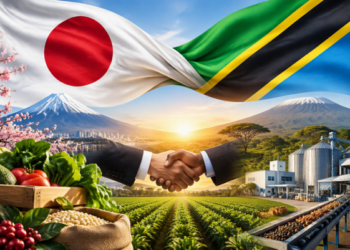
India’s High Commissioner, H.E. Shri Bishwadip Dey, encouraged Indian investors to explore opportunities in Tanzania’s agriculture, poultry and technology sectors.
International participation, he argued, can bring not only capital but also expertise in processing, logistics and production systems, helping Tanzania close productivity gaps and strengthen its ability to serve regional and global markets.
AfCFTA Adds a Bigger Market
The African Continental Free Trade Area (AfCFTA) provides Tanzania with access to a much larger consumer base. With tariffs progressively eliminated on 90% of goods, Tanzanian agribusinesses could reach millions more consumers provided they can meet standards, maintain volumes and compete on price.
The Financing Gap
Oscar Kisanga of TCCIA highlighted finance as the biggest challenge for small‑scale farmers. Without affordable capital, they struggle to invest in irrigation, modern equipment and quality inputs.
He also called for regional specialisation in crops, enabling areas to build expertise and stronger commercial links. But this model requires reliable buyers, infrastructure and market information to ensure higher production translates into higher incomes.
Where the Investment Opportunity Lies
FLIP 2026 discussions point to investment needs across the entire agricultural economy: irrigation, agri‑tech, inputs, storage, cold‑chain systems, processing, packaging, transport, animal health, logistics and market infrastructure.
The objective is to move products efficiently from farms to consumers while capturing more value within Tanzania, shifting away from raw commodity exports toward integrated food industries.
Investor Outlook
Tanzania already has the foundations for a major agricultural economy: land, climate, diverse commodities and regional access. The challenge is converting these into consistent, high‑quality, commercially competitive production.
FLIP 2026 made clear that Tanzania’s ambition is not just to grow more food, but to build the business ecosystem around food production, technology, finance, logistics and markets.
If those elements align, Tanzania could move from being a country with agricultural potential to a competitive African hub for food production, processing and investment.