










Tanzania’s trade discussions this month are characterized by a particular annoyance, which has nothing to do with how much the nation is selling but rather with how little it is keeping. Export numbers are quite impressive. However, the government’s own trade promotion agency is now bluntly stating that Tanzania is losing money each time a truck of unprocessed rice or raw avocados crosses a border because someone else is making more money than Tanzanian processing facilities could.


The Numbers Are Good — That’s Exactly the Problem
Tanzania’s overall exports of goods and services increased from $16.0 billion to $17.6 billion in 2025, a 10.2% increase. While the nation’s trade imbalance really shrank to just over $5.1 billion and foreign reserves increased to $6.3 billion, covering over five months’ worth of imports, gold did the most work, providing $4.7 billion, or nearly 46 percent of all goods exports. Regional trade is heading in the same direction: exports from the East African Community increased by 37% to $52.3 billion, primarily due to mineral commodities, and China solidified its status as the bloc’s top export destination.
For a developing economy, those figures are generally considered healthy. TanTrade’s intervention this month differs from a standard complaint precisely because of this. Speaking in September, Director General Ephraim Mafuru of the Tanzania Trade Development Authority contended that crops like avocados, rice, and maize are still being exported with little processing, giving other countries the opportunity to profit from the manufacturing value and jobs that could have been created in Tanzania. The criticism is directed at what Tanzania chooses to sell raw commodities versus completed goods—rather than whether it can sell overseas.
The South Africa Case Study
When you examine a single trading connection, Mafuru’s thesis quickly becomes tangible. Last year, Tanzania exported goods worth about $2.9 billion to South Africa, including gold, ceramics, and flat glass, while importing less than $1 billion in return. Mafuru cites this lopsided trade surplus as evidence that Tanzania can compete well beyond its traditional raw-material basket when the product is right. His recommendations for the future are twofold: increase domestic demand for Tanzanian-made goods in particular, arguing that a stronger home market gives local factories the volume they need to expand, hire, and eventually compete internationally; and build sustained product quality and compliance with international standards, since buyers develop long-term relationships with suppliers they trust rather than one-time sellers.
The Border Infrastructure Doing the Unglamorous Work
Tanzania has been making the necessary investments because without the physical mechanism of commerce operating effectively, none of this ambition moves an inch. A new, higher objective of TZS 136 billion for 2026–2027 was set when customs personnel at the Horohoro One Stop Border Post in Tanga Region reported handling TZS 748 billion in commerce in the previous fiscal year, exceeding the post’s revenue collection target by TZS 10 billion. During the event, Deputy Minister for Finance Ambassador Omar announced that the Tanzania Revenue Authority would receive TZS 573 billion in the 2026–2027 budget, which included the purchase of 27 state-of-the-art cargo scanners for customs stations across the country. These devices are intended to expedite clearance procedures, strengthen border security, and simultaneously increase the accuracy of goods assessment.
It is important to note that the Horohoro post’s own statistics almost perfectly capture Mafuru’s point: of the TZS 748 billion in trade that passed through, exports only made-up TZS 238 billion compared to TZS 510 billion in imports. This represents a district-level trade deficit within a national trade surplus narrative and serves as a reminder that Tanzania’s export strength is not consistent across all border crossings.
Betting on the Free Trade Zone
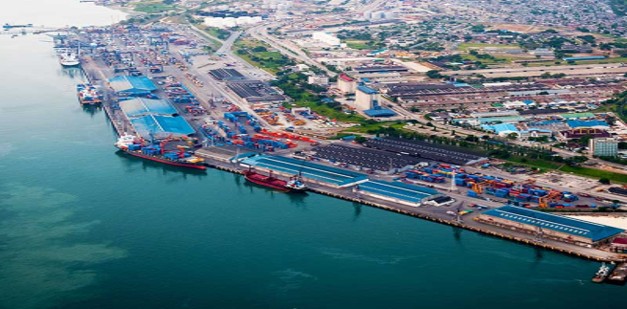
Tanzania is preparing for a more significant structural change behind the daily customs figures. The Tanzania Investment and Special Economic Zones Authority actively promotes investment through Special Economic Zones and Export Processing Zones created to provide manufacturers with tax and logistical incentives specifically for export-oriented production, giving the nation preferential access to a market of 1.39 billion people since ratifying the African Continental Free Trade Area. Tanzania’s position as a trade corridor connecting Asia, Europe, and the Americas to landlocked neighbors like the Democratic Republic of the Congo, Burundi, Rwanda, Uganda, Zambia, and Malawi many of which already depend on Tanzanian ports for their own import and export flows gives it a geographic argument to match the policy one.
Even further afield, there have been early, exploratory signals of interest. Denis Manturov, Russia’s Minister of Industry and Trade, has suggested that Tanzania could act as a platform for trade and logistics that connects Russian goods to larger African markets, but this is still merely a ministerial comment rather than a formal agreement.
Reading This Alongside Everything Else This Month
This trade story is perhaps the thread that connects a lot of this year’s news, rather than being in a vacuum. In one way or another, the industrial clusters the Ministry of Lands is setting aside, the steel plants and avocado processing push covered in agriculture and mining reporting, the new rail lines built to move minerals to port, the airports designed to move cargo faster all of it is infrastructure built to answer the question Tan Trade is now openly posing: will Tanzania continue to export raw materials or begin exporting finished goods?
The Bigger Picture With a trade imbalance that is decreasing rather than increasing, Tanzania’s trade figures demonstrate that the nation has already resolved the more difficult issue: it can sell its goods in large quantities to significant international markets. TanTrade’s action this month demonstrates that the government is no longer content to rely solely on it. Exporting more is not the next stage of the trade narrative. It is about exporting more intelligently, transforming a truckload of raw avocados into a container of packed avocado oil before it even reaches a border crossing, and retaining the employment created by this difference within Tanzania instead of sending them out with the produce