










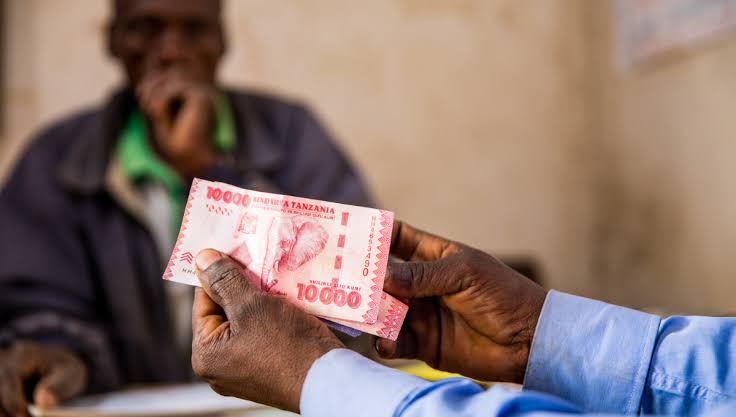
June 2026 was a defining month for Tanzania’s economy and financial sector. The month was marked by the presentation and approval of the 2026/27 National Budget, the country’s first budget under the Fourth Five-Year Development Plan (FYDP IV), and the rollout of the implementation framework for Tanzania Development Vision 2050. Together, these developments signalled a shift from the achievements of Vision 2025 towards a long-term strategy aimed at transforming Tanzania into a US$1 trillion economy by 2050.


Rather than introducing short-term stimulus measures, June focused on strengthening fiscal sustainability, accelerating private sector-led investment, expanding domestic revenue mobilisation, and laying the groundwork for sustained economic transformation.
“The 2026/27 Budget is the first blueprint for implementing the Fourth Five-Year Development Plan and Tanzania Development Vision 2050.” — Ministry of Finance, Budget Speech 2026/27.
Record TZS 62.33 Trillion Budget Signals Confidence
One of the month’s biggest economic milestones was Parliament’s approval of the TZS 62.33 trillion national budget, representing a 10.3 percent increase over the previous fiscal year’s budget of TZS 56.49 trillion.
The spending plan prioritises strategic infrastructure, industrialisation, agriculture, education, health, energy and transport while maintaining macroeconomic stability. Approximately 74.2 percent of the budget will be financed through domestic revenue, reflecting the government’s continued commitment to reducing reliance on external financing.
The government also targets:
- 6.3% GDP growth
- Inflation below 5%
- Budget deficit of 3% of GDP
- Foreign exchange reserves covering at least four months of imports
These targets reinforce Tanzania’s reputation for prudent fiscal management amid global economic uncertainty.
“Building a resilient economy through digital transformation, strategic investment and sustainable fiscal policies for inclusive economic growth.” — Theme of the 2026/27 National Budget.
Vision 2050 Charts the Path to a US$1 Trillion Economy
June also marked the beginning of implementation for Tanzania Development Vision 2050, which replaces Vision 2025 as the country’s long-term development framework.
The strategy seeks to expand Tanzania’s economy from approximately US$90 billion today to US$1 trillion by 2050, supported by industrialisation, value addition, digital transformation, human capital development and increased private investment.
Achieving this ambition will require economic growth to accelerate beyond current levels over the coming decades, with greater productivity across agriculture, manufacturing, mining, tourism and financial services.
“Vision 2050 is more than a policy document—it is Tanzania’s roadmap towards becoming a high-income, competitive and inclusive economy.” — Government implementation framework.
Macroeconomic Stability Continues to Strengthen Investor Confidence
Despite ongoing global economic headwinds, Tanzania entered the new fiscal year with a stable macroeconomic environment.
Government reports indicate that inflation has remained within the national target range while economic growth continues to outperform many regional peers. Fiscal policy has remained disciplined, supported by improved tax collection, stronger public financial management and continued investment in productive sectors.
The country’s stable macroeconomic environment continues to underpin investor confidence, particularly in manufacturing, mining, energy, agriculture and logistics.
Private Sector Investment Remains Central to Growth
A recurring message throughout June was the government’s commitment to increasing private sector participation in economic development.
The 2026/27 Budget includes measures aimed at:
- Improving the investment climate
- Expanding digital tax administration
- Supporting industrial value addition
- Strengthening Special Economic Zones
- Promoting export-oriented industries
- Improving access to finance
The government also continues to prioritise investments in strategic sectors including rare earth minerals, natural gas, agriculture, logistics and manufacturing as drivers of long-term economic growth.
“Strategic investment remains essential for improving productivity, competitiveness and sustainable economic growth.” — 2026/27 Budget Policy Statement.
Financial Sector Supports Economic Transformation
Tanzania’s financial sector continued to play an increasingly important role in supporting economic development during June.
Commercial banks, capital markets and development finance institutions remain critical in mobilising domestic savings and financing investment. The government’s emphasis on digital transformation is also expected to improve financial inclusion, tax administration and access to financial services for businesses and households.
At the same time, continued reforms are aimed at strengthening credit access for small and medium-sized enterprises (SMEs), encouraging innovation and supporting entrepreneurship—key pillars of Vision 2050.
Investment Outlook
June 2026 demonstrated that Tanzania’s economic agenda has entered a new phase. The combination of a record national budget, the launch of Vision 2050 implementation, and continued macroeconomic stability provides a strong foundation for long-term growth.
For investors, the outlook remains positive across infrastructure, financial services, manufacturing, energy, agriculture, mining and digital industries. Continued fiscal discipline, rising domestic revenue mobilisation and policies that encourage private investment are expected to strengthen Tanzania’s competitiveness over the coming years.
As the country embarks on the implementation of Vision 2050, June will be remembered as the month that marked the transition from the achievements of Vision 2025 to a more ambitious development agenda—one aimed at building a resilient, inclusive and US$1 trillion economy by mid-century.